
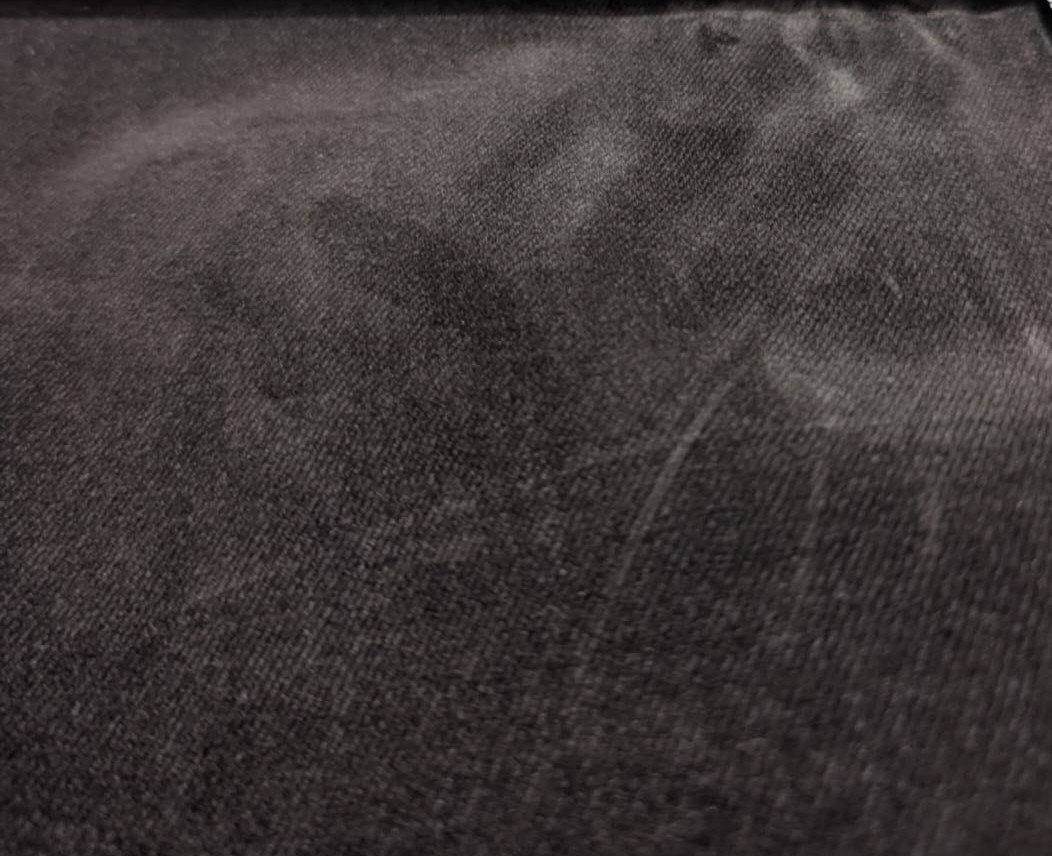
Flock Denim is a contemporary denim textile enhanced with a raised, tactile surface created through the application of short textile fibres onto selected areas of the denim. The flocking process adds a soft, velvety or suede-like texture to the traditionally rugged surface of denim, creating a distinctive contrast between the structured twill base and the three-dimensional flocked design.
The base fabric is typically constructed as a cotton denim, most commonly using a 3/1 right-hand twill construction. Following dyeing and finishing, selected areas of the denim surface are coated with a suitable adhesive according to the intended flock pattern. Short fibres, known as flock, are then applied to the adhesive-coated areas, commonly through an electrostatic process. The fibres stand approximately perpendicular to the surface, producing the characteristic raised and velvety appearance.
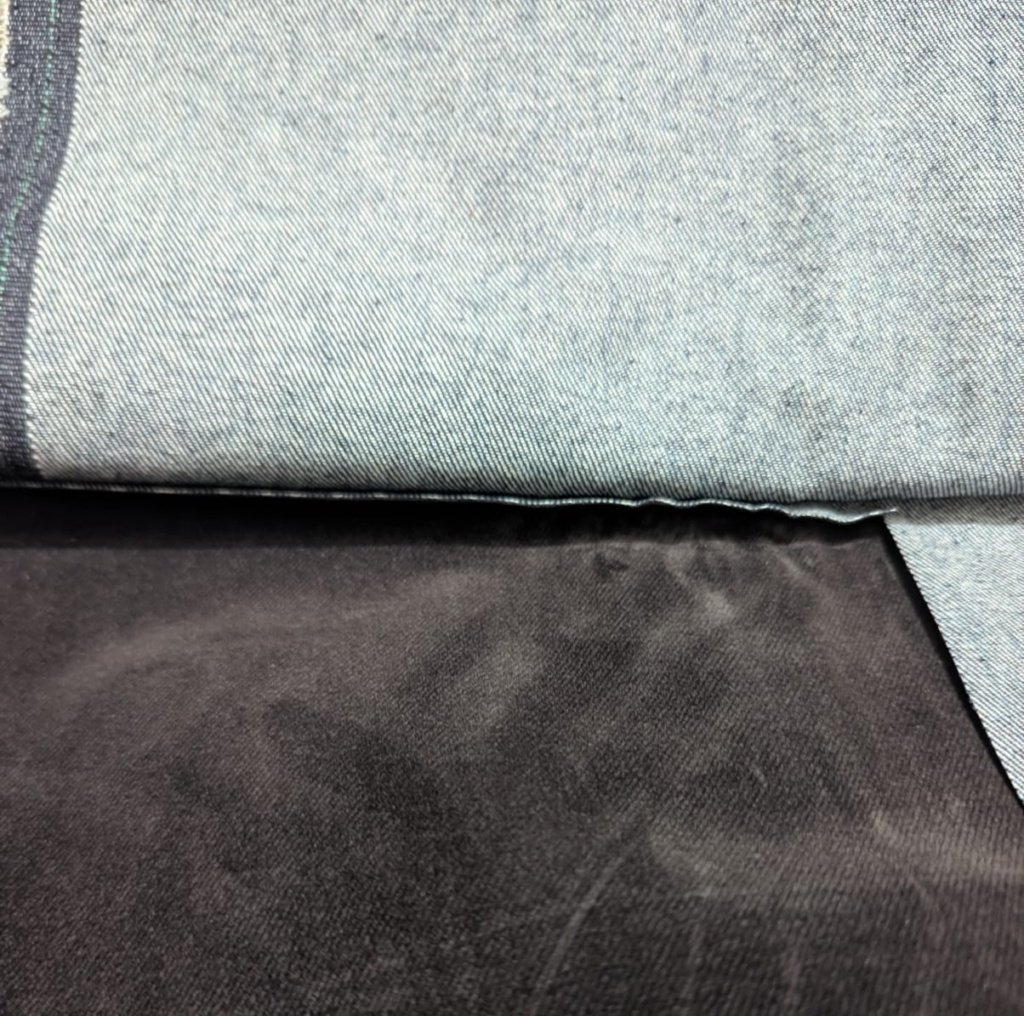
Flock Denim represents an important development in contemporary denim design because it introduces surface texture and tactile contrast without fundamentally changing the underlying denim construction. Depending on the fibre type, fibre length, density, adhesive system, and application technique, flocking can create effects ranging from subtle tonal textures to highly contrasting decorative patterns.
The technique is widely used in fashion denim for jeans, jackets, overshirts, skirts, dresses, bags, and other lifestyle products. Flocking may be applied at the fabric stage or directly to finished garments, allowing designers to develop localized motifs, logos, geometric patterns, botanical forms, heritage-inspired graphics, and other decorative effects.
The development of modern synthetic fibres and adhesive technologies has significantly expanded the possibilities of flocking. Rayon, polyester, nylon, and other synthetic fibres may be used according to the desired hand feel, appearance, durability, and application requirements. Fibre length and density are particularly important in determining the final tactile and visual character of the flocked surface.
Common performance considerations for Flock Denim include adhesion strength, rubbing and crocking resistance, wash durability, abrasion resistance, fibre shedding, colourfastness, and compatibility between the adhesive and denim substrate. Washing and mechanical abrasion can gradually alter the flocked surface, making durability testing an important part of product development.
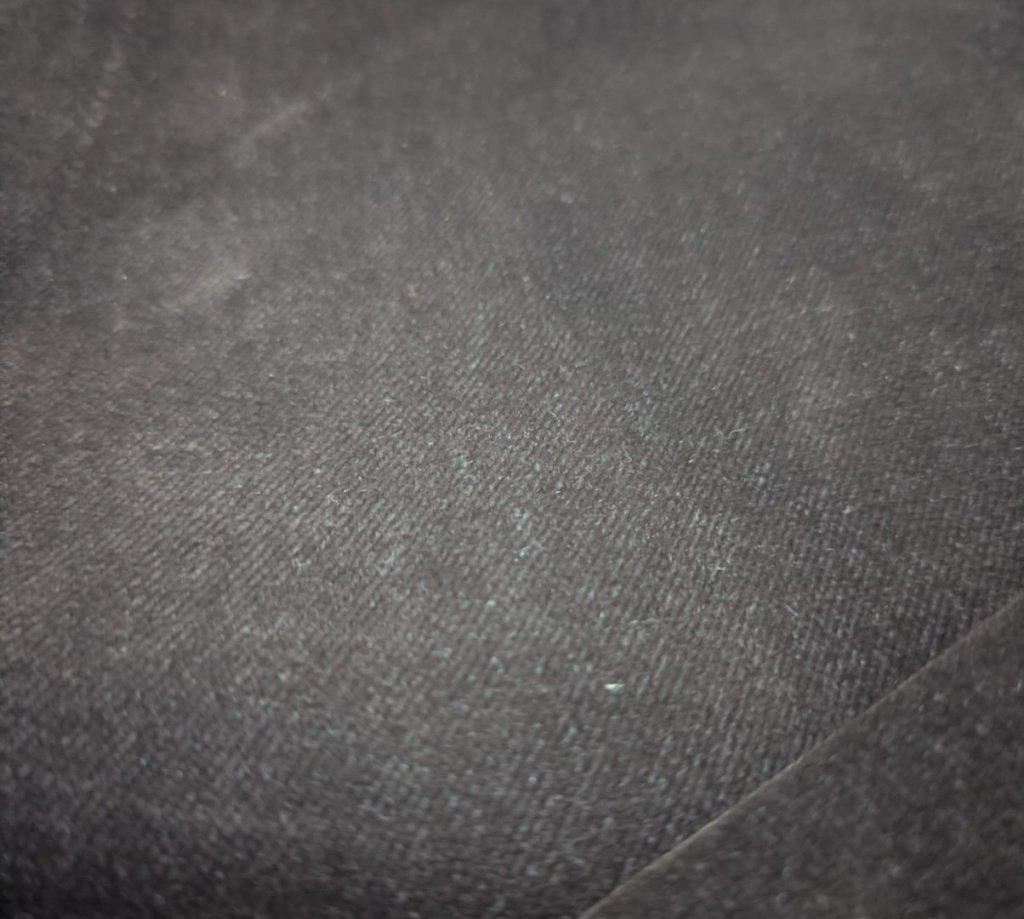
From a design perspective, Flock Denim demonstrates the movement of denim beyond conventional indigo colour, washing, and construction into advanced surface engineering. The combination of authentic denim structure with a soft raised surface creates a distinctive material language that can range from understated sophistication to bold fashion expression.
In a textile museum, Flock Denim represents the intersection of traditional denim construction and contemporary textile finishing technology. It provides an opportunity to study how fibre, adhesive, pattern, surface height, colour, and finishing interact to transform the character of a familiar textile material.