Texheritage Bangladesh - is Bangladesh’s first dedicated, research-based textile museum and digital archive

Available in the Museum’s Library
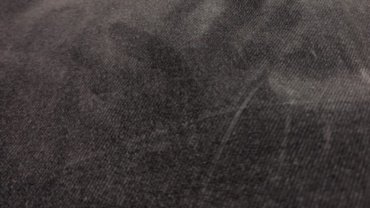
Flock Denim offers valuable opportunities for studying denim surface engineering, textile flocking technology, fibre application, adhesive systems, tactile design, and contemporary denim innovation. It also demonstrates how surface modification can create new aesthetic and sensory possibilities from an established textile construction.
Sample Details:
* Object Title: Flock Denim
* Accession Number: THB W-Denim 04/2026
* Category: Denim Collection / Surface Engineering
* Period: 2026
* Region: Asia, Bangladesh
* Material Composition: Need Analysis
* Base Fabric Construction: Denim / 3/1 Right-Hand Twill — Need Analysis
* GSM: Need Analysis
* Width: Need Analysis
* Surface Technique: Flocking / Flock Application
* Flock Fibre: Viscose
* Flock Fibre Length: Need Analysis
* Adhesive System: Need Analysis
* Dye Type: Need Analysis
* Condition Assessment: Fabric Swatch
* Historical Notes: Flocking is a textile surface-decoration technique in which short fibres are applied to an adhesive-coated surface to create a raised, tactile finish. Its development and commercial application expanded significantly with advances in synthetic fibres, adhesives, and textile printing technologies. In denim, flocking provides an additional dimension of texture and visual contrast, extending denim design into contemporary surface engineering.
* Source / Donor: Hullor Fashion Limited
Available in Museum’s Library
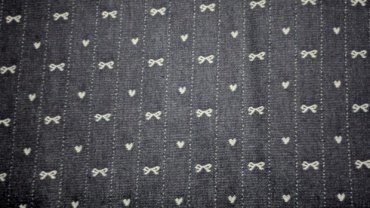
Research opportunities include investigating Jacquard weaving technology, engineered denim structures, complex weave repeats, yarn-dyed pattern development, indigo and colored yarn combinations, and three-dimensional surface effects. Further research can explore the relationship between weave construction and fabric performance, including abrasion resistance, dimensional stability, comfort, pattern definition, and the effect of washing and finishing on Jacquard structures.
Sample Details:
* Object Title: Jacquard Denim Fabric
* Accession Number: THB W-Denim 03/2026
* Category: Woven Collection – Denim
* Period: 2026
* Region: Asia, CHINA
* Material Composition: 100% Cotton
* Weave Construction: Jacquard / Patterned Twill
* Yarn Count (warp × weft): To be documented from sample
* GSM: 390
* Width: 60″
* Dye Type: Indigo / Yarn Dyed
* Warp: Indigo-dyed yarn
* Weft: Undyed / Dyed yarn
* Condition Assessment: Fabric Hanger
* Historical Notes: Jacquard Denim combines traditional denim construction with Jacquard weaving technology, allowing complex motifs, geometric patterns, logos, and textured effects to be formed directly within the fabric structure. Unlike printed designs, the pattern is created through controlled warp lifting and different yarn interlacements. The development demonstrates the evolution of denim from a conventional functional twill into an engineered and decorative textile. Modern Jacquard Denim is used in jeanswear, jackets, shirts, outerwear, accessories, and lifestyle products, reflecting continuing innovation in denim design and fabric construction.
* Source: Crossline Sourcing House
Available in Museum’s Library
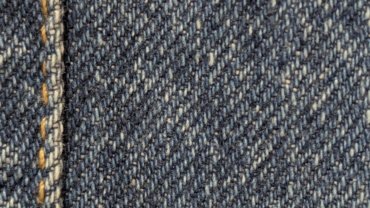
Research opportunities include investigating indigo dyeing technology, low-impact denim processing, recycled and regenerative cotton, stretch and non-stretch denim engineering, water-saving finishing, and laser/ozone-based garment treatments. Further research can explore improving abrasion resistance, color retention, dimensional stability, and comfort while reducing water, energy, and chemical consumption throughout denim production and finishing.
Sample Details:
* Object Title: 3/1 RHT Indigo Denim Fabric
* Accession Number: THB W-Denim 02/2026
* Category: Woven Collection – Denim
* Period: 2026
* Region: Asia, Bangladesh
* Material Composition: 100% Cotton
Weave Construction: 3/1 Right-Hand * Twill (RHT)
* Yarn Count (warp × weft): To be documented from sample
* GSM: 12.50 Oz
* Width: 69″
* Dye Type: Indigo
* Weft: Undyed / Natural Cotton
* Condition Assessment: Fabric Hanger
* Historical Notes: Denim developed from durable cotton twill fabrics historically associated with workwear and utility garments. The characteristic blue-and-white appearance results from indigo-dyed warp yarns combined with lighter weft yarns. The 3/1 twill construction became particularly significant in jeanswear because of its strength, abrasion resistance, and ability to develop distinctive fading through wear and washing. The fabric later evolved from traditional workwear into one of the most influential materials in global fashion and lifestyle apparel. Bangladesh has subsequently become an important manufacturing and export hub for denim garments, supporting the development of advanced denim weaving, dyeing, washing and finishing technologies.
Source: AZLAN DENIM
Available in the Museum’s Library.
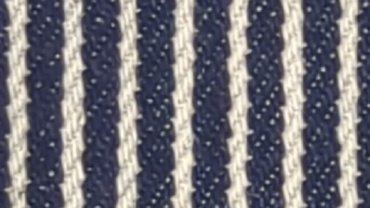
Stripe Denim offers significant research potential for studying yarn-dyed pattern development, twill weave construction, indigo dyeing techniques, and the evolution of functional workwear into modern fashion textiles. It provides valuable insight into the history of striped denim fabrics used in railroad uniforms, industrial workwear, and contemporary denim apparel, illustrating the relationship between textile engineering, durability, and aesthetic design.
Sample Details:
* Object Title: Stripe Denim Fabric
* Accession Number: THB W-DEN 01/2026
* Category: Woven Collection – Denim Fabrics
* Period: 2026
* Region: Asia, Bangladesh
* Material Composition: 100% Cotton
* Weave Construction: 3/1 Right-Hand Twill
* Yarn Count (Warp × Weft): Need analysis
* GSM: Need to check
* Dye Type: Indigo Warp with Yarn-Dyed Stripe Effect
* Condition Assessment: Fabric Swatch
Historical Notes: Stripe Denim originated in the late 19th and early 20th centuries, particularly in North America, where hickory stripe denim became the preferred fabric for railroad workers, mechanics, and industrial laborers. The striped construction provided both visual distinction and practical performance, making it an iconic workwear textile before evolving into a popular fashion fabric.
