Available in the Museum’s Library.
The research scope of crepe fabric includes analysis of yarn twist levels, fiber composition, and finishing techniques to understand their impact on surface texture, drape performance, and dimensional stability. Further study can explore sustainable fiber integration, process optimization, and performance enhancement for contemporary apparel and technical textile applications.
Sample Details:
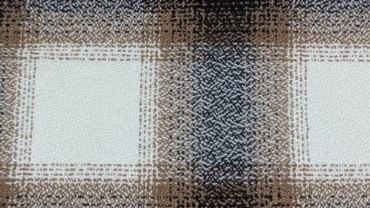
* Object Title : Crepe Fabric – Check
* Accession Number: THB W-TWF 01/2026
* Category : Woven Collection
* Period : 2026
* Region : Asia, Bangladesh
* Material Composition : 35% Rayon 65% Poly
* Weave Construction: Creap Weave
* Yarn Count (warp × weft) : 20/2×20/2/60×42
* GSM : 250
* Width: 57″
* Dye Type : Synthetic
* Condition Assessment : Fabric swatch
* Historical Notes : Crepe fabric emerged prominently in 19th-century Europe and Asia, particularly in silk form, where it was widely used for formal and ceremonial garments due to its elegant drape and subdued texture. Over time, with the development of high-twist yarn technology and synthetic fibers, crepe evolved into a versatile global fashion fabric, expanding into everyday apparel and modern industrial production.
* Source / Donor : Anwar Textile