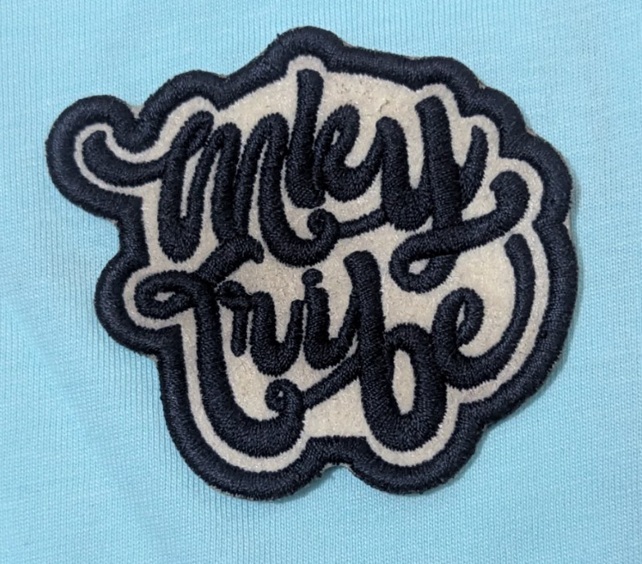
Patch embroidery is a value-added embellishment technique where embroidered designs are produced on a separate base fabric and later attached to garments or accessories. Unlike direct embroidery, patch embroidery allows independent production, clean edge finishing, and greater flexibility in branding, customization, and bulk manufacturing.
The base material is typically twill, felt, canvas, or polyester fabric, selected for dimensional stability during stitching. Designs are created using multi-head computerized embroidery machines, with stitch types including satin stitch, fill stitch (tatami), and border stitching for edge reinforcement. Thread types commonly include polyester for durability and color fastness.
Edge finishing methods include:
- Merrow (overlock) border – classic thick stitched edge
- Heat-cut / laser-cut edge – clean sealed perimeter
- Satin stitch border – smooth premium finish
Attachment methods vary depending on end use:
- Heat seal (adhesive backing)
- Sew-on application
- Velcro backing (removable patches)
- Pressure-sensitive adhesive
Patch embroidery is widely used in military uniforms, sportswear, corporate branding, denim garments, caps, promotional products, and fashion streetwear. It enhances brand identity, supports modular production, and allows cost-efficient bulk manufacturing with flexible inventory management.
From a technical perspective, patch embroidery demonstrates the integration of stitch engineering, edge sealing technology, and garment application methods. In textile education and museum collections, it represents a structured example of modular surface embellishment within modern apparel manufacturing systems.