
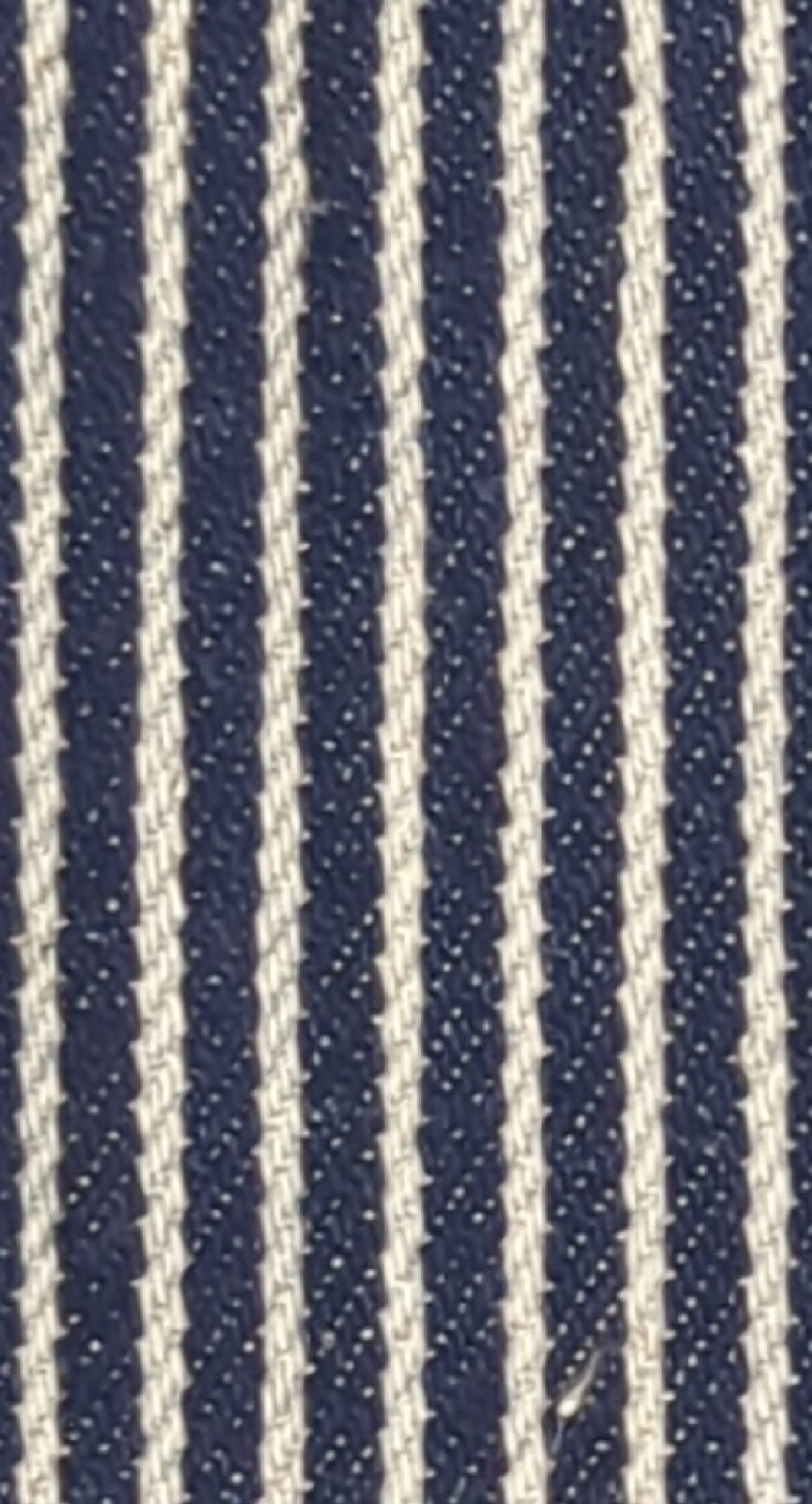
Stripe Denim is a woven denim fabric featuring vertical or horizontal stripe patterns created through yarn dyeing, weave construction, or the combination of indigo and colored yarns. It combines the durability and heritage of traditional denim with distinctive striped aesthetics, making it suitable for both fashion and workwear applications.
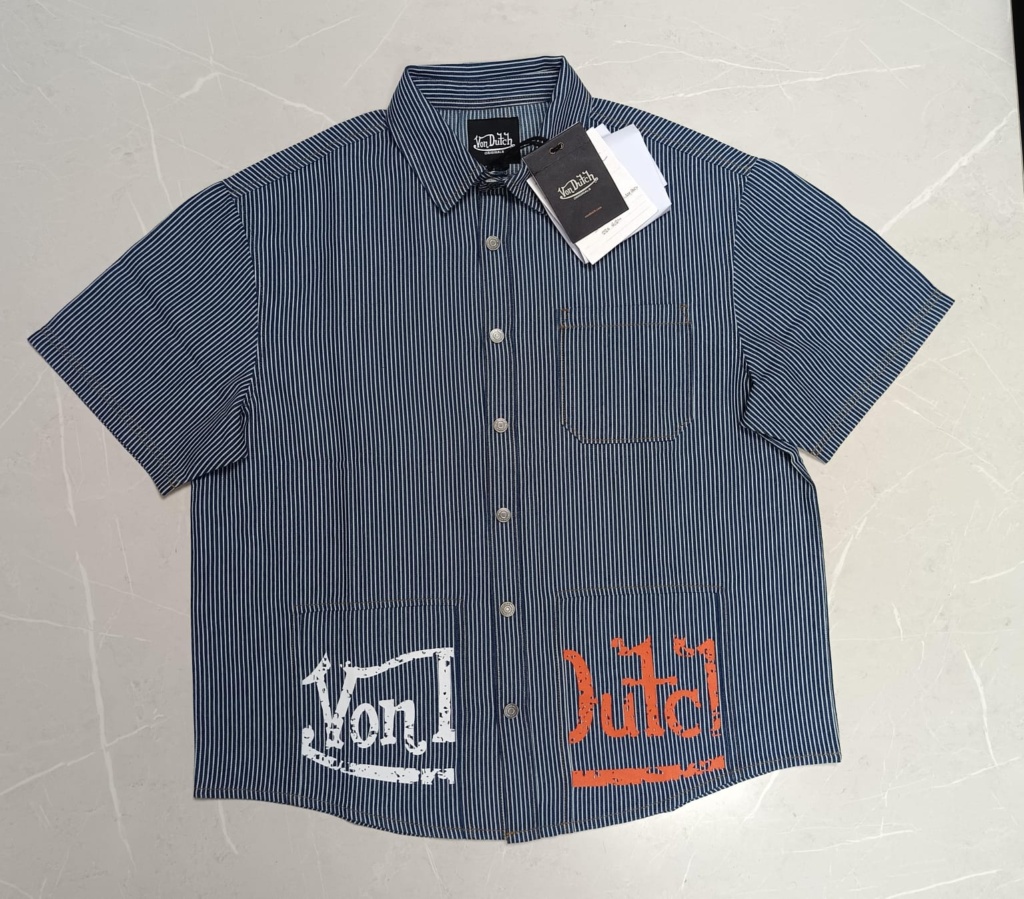
Stripe Denim is typically constructed using a twill weave, where striped effects are achieved by arranging dyed warp and weft yarns in predetermined sequences. Most Stripe Denim incorporates indigo-dyed cotton warp yarns with natural, dyed, or contrasting yarns to create visible stripe patterns. The fabric generally ranges from medium to heavy weight, offering excellent durability, dimensional stability, and abrasion resistance while maintaining the characteristic diagonal twill appearance. Depending on the stripe design and yarn selection, the fabric may exhibit varying textures, from smooth and refined to rugged and vintage-inspired.
Stripe Denim has historical roots in late 19th and early 20th-century workwear, particularly in railroad uniforms, engineer jackets, bib overalls, and industrial garments. Hickory Stripe Denim became especially popular in North America as a practical fabric for railway workers, mechanics, and laborers because its striped pattern helped conceal dirt and grease while maintaining a distinctive professional appearance. Over time, Stripe Denim evolved beyond industrial clothing into fashion collections, where designers embraced its heritage appeal and unique visual identity.
Common finishes include enzyme washing, stone washing, garment washing, softening, and sanforization to improve comfort, dimensional stability, and appearance. Modern Stripe Denim may also receive stretch finishes, vintage washes, coated finishes, or sustainable treatments depending on its intended application and fiber composition.
Stripe Denim is widely used for jackets, shirts, jeans, overalls, workwear, uniforms, fashion apparel, accessories, and lifestyle products where both durability and distinctive design are desired.
In a textile museum, Stripe Denim represents the evolution of denim beyond solid indigo fabrics, demonstrating how yarn dyeing, weave engineering, and pattern development transformed a functional workwear textile into a versatile fashion material. It illustrates the rich heritage of industrial clothing while showcasing the innovation that continues to shape modern denim manufacturing.