
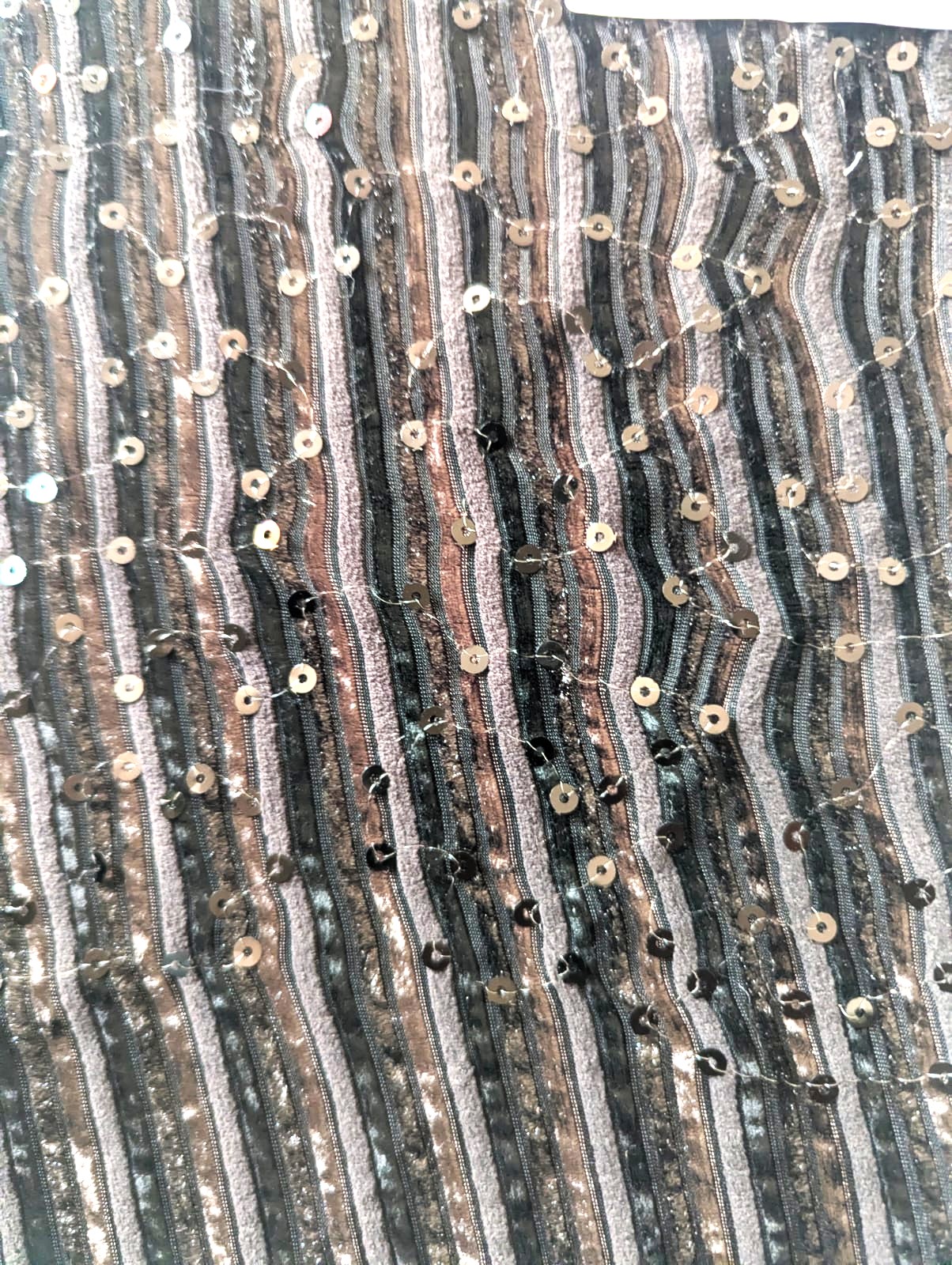
Sequin Embroidery Polyester Fabric is a decorative, surface-rich textile characterized by a structured base combined with dense sequin embellishment. It features a visually striking, rhythmic pattern created through embroidery techniques, offering high shine, dimensional texture, and a bold fashion-forward appeal. Typically made from 100% polyester, this fabric is valued for its durability, lightweight performance, and cost-effective adaptability for fashion and occasion wear.
Sequin Embroidery Polyester Fabric is constructed using an embroidery-based technique, where sequins are stitched onto a pre-formed base fabric—often a mesh, knit, or lightweight woven ground. In this sample, the sequins are arranged in linear or wave-like formations, creating a directional texture across the fabric surface. The base structure remains stable while the embellishment adds weight and visual complexity. With a width of approximately 130 cm and a weight around 178 GSM, the fabric balances moderate heaviness with flexibility, resulting in a slightly stiff hand feel due to the sequin density, while still maintaining workable drape.
This type of fabric emerged prominently with the advancement of automated embroidery and embellishment technologies in modern textile manufacturing, particularly in China and other large-scale production hubs. Unlike traditional hand-embellished textiles, sequin embroidery polyester fabrics represent industrial precision, scalability, and consistent quality. It reflects the shift of decorative textiles from artisanal luxury to accessible fashion segments, while still retaining a premium visual impact.
Common finishes include heat setting for dimensional stability, surface cleaning to remove excess threads or residues, and backing reinforcement (in some cases) to improve comfort and durability. The polyester composition ensures resistance to wrinkles, shrinkage, and abrasion, making it suitable for repeated use in fashion applications.
Sequin Embroidery Polyester Fabric is widely used in women’s wear, evening dresses, party tops, skirts, stage costumes, and fashion-forward outerwear detailing. It is also popular in fast fashion and occasion wear collections where visual impact and trend responsiveness are key commercial drivers.
In a textile museum, Sequin Embroidery Polyester Fabric represents the evolution of embellishment from handcrafted artistry to technologically driven mass production. It highlights how modern machinery, synthetic fibers, and design engineering combine to create high-impact textiles that bridge affordability with aesthetic richness, reflecting contemporary fashion dynamics and global manufacturing capabilities.