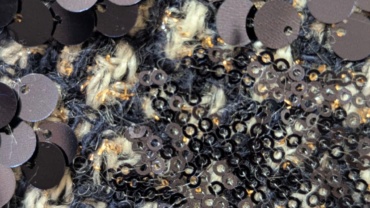
Reflective Fabric is a functional textile engineered to enhance visibility by returning incident light directly toward its source through the principle of retroreflection. Unlike ordinary fabrics that scatter light, reflective fabrics incorporate microscopic glass beads or microprismatic elements that reflect light back to the observer, making the wearer highly visible in low-light and nighttime environments. Widely used in protective clothing, sportswear, transportation, and emergency services, reflective fabric combines textile engineering with optical science to improve human safety.

Reflective fabric is typically constructed by laminating or coating a woven, knitted, or nonwoven base fabric with retroreflective materials containing glass beads or microprismatic technology. The base fabric is commonly made from polyester, nylon, cotton, or blended fibers, while the reflective layer is bonded using durable polymer systems. Fabric weight generally ranges from 120–350 GSM, depending on the intended application. The material offers high visibility under direct illumination, good dimensional stability, and varying degrees of flexibility, breathability, and wash durability based on its construction and finish.
The development of reflective materials began in the early twentieth century with research into retroreflective glass beads. Commercial adoption accelerated from the 1930s onward, initially for traffic signs and road safety applications. By the late twentieth century, reflective fabrics had become standard components of industrial workwear, emergency response uniforms, railway clothing, military equipment, and high-visibility apparel worldwide. Continuous innovation has since expanded their use into fashion, sportswear, footwear, and smart textile applications.
Common finishes include heat-transfer lamination, adhesive bonding, protective polymer coatings, water-repellent treatments, flame-retardant finishes, and stretchable reflective coatings. Modern developments also focus on environmentally friendly manufacturing processes, enhanced wash durability, improved flexibility, and integration with wearable electronic systems.

Reflective fabric is widely used for high-visibility safety vests, industrial workwear, firefighter and police uniforms, road construction clothing, cycling apparel, sportswear, school bags, footwear, outdoor equipment, and transportation safety accessories. Many products are manufactured to comply with international visibility standards such as EN ISO 20471 and ANSI/ISEA 107.
In a textile museum, Reflective Fabric represents the successful integration of textile engineering, materials science, and optical technology to address critical safety challenges. It illustrates how functional textiles have evolved beyond aesthetics to protect human life, demonstrating the transformation of fabrics into high-performance materials that continue to shape modern industry, transportation, and occupational safety.