
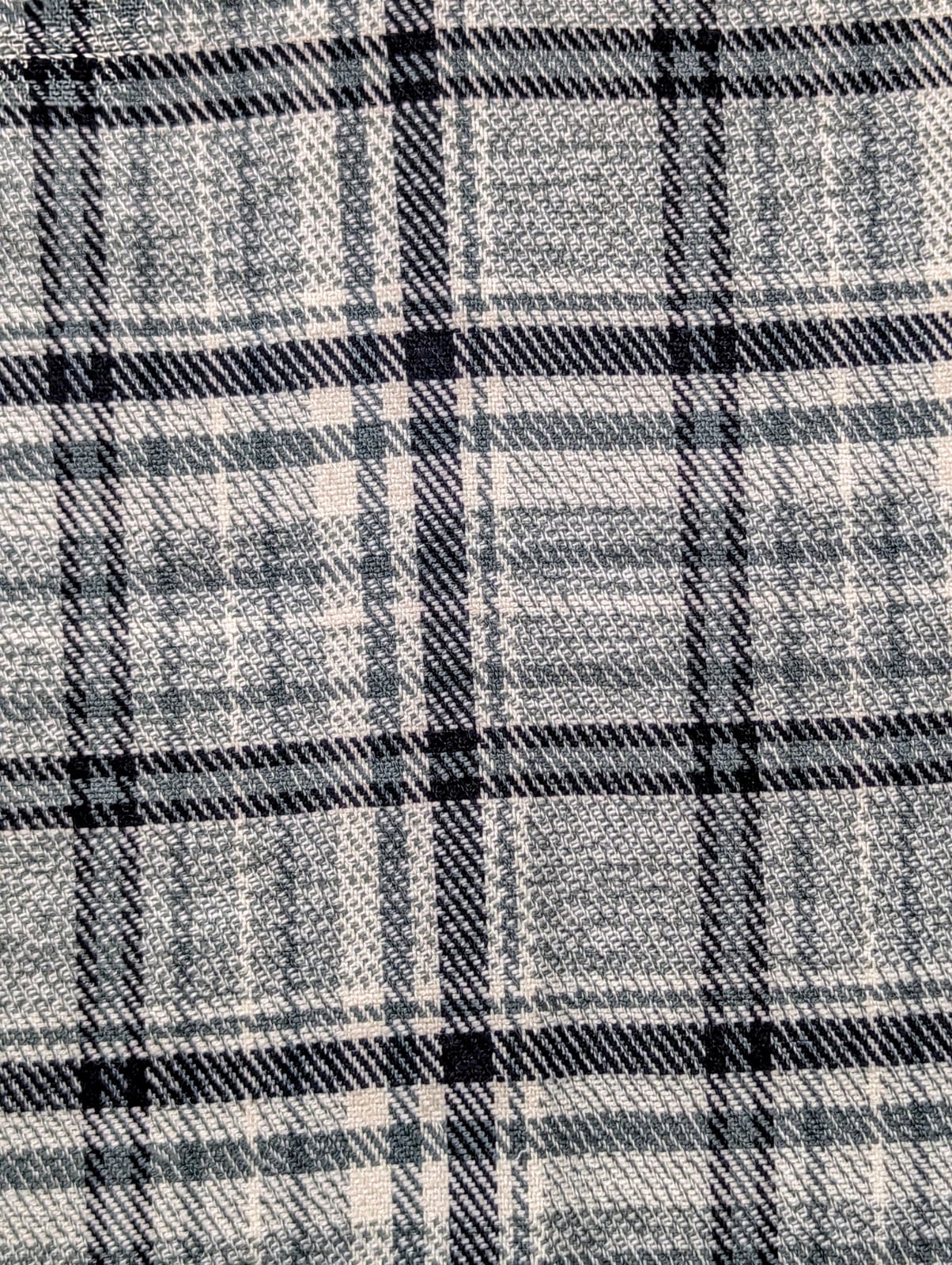
Right-hand twill, also known as S-twill, is a type of twill weave in which the diagonal ribs run from the lower left to the upper right of the fabric when viewed face-on. This directional diagonal pattern is created by the warp yarns passing over one or more weft yarns in a repeating sequence, producing a consistent right-slanting wale. The slant affects the fabric’s appearance, drape, and wear characteristics, giving it a slightly firmer hand and enhanced durability compared to plain weaves.
Right-hand twill can be woven from cotton, wool, silk, polyester, or blended fibers, with yarn thickness and density tailored to the intended application. Fabric weight typically ranges from 150–400 GSM, suitable for denim, chinos, gabardine, jackets, and uniforms. The diagonal structure provides improved wrinkle resistance, abrasion strength, and drape, while offering a subtle texture that is visually appealing.
In a museum context, S-twill illustrates how twill directionality influences fabric performance and design, demonstrating the interplay between weave structure, aesthetics, and technical function in woven textiles. It serves as an important reference for understanding directional twill patterns in apparel and industrial fabrics.