
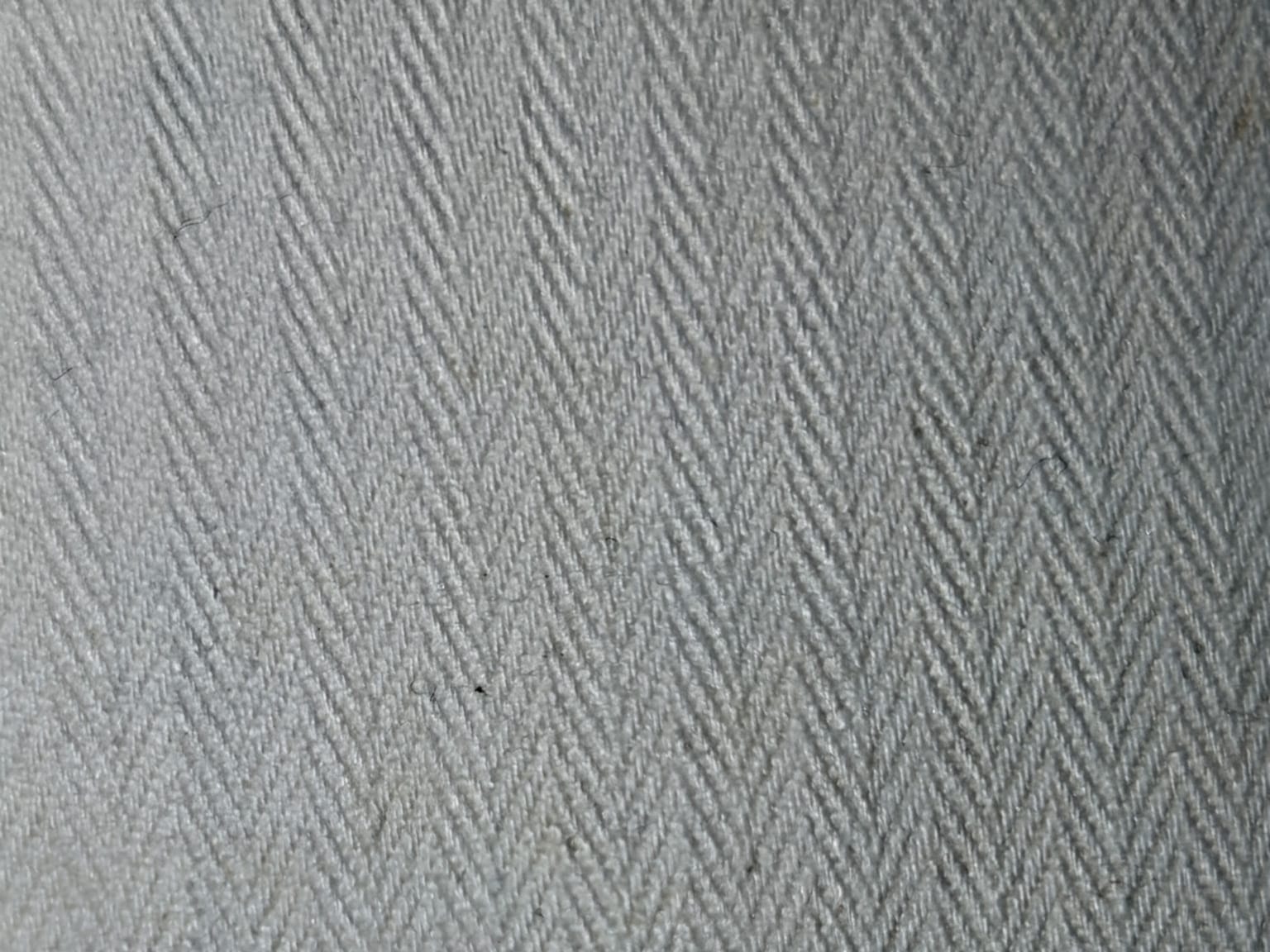
Zig Zag Twill Fabric is a structured textile characterized by a repeating diagonal zigzag pattern formed through the systematic reversal of twill lines within the weave construction. Traditionally produced from wool, cotton, or blended fibers, Zig Zag Twill is valued for its firm hand, durability, dimensional stability, and distinctive visual texture.
Zig Zag Twill is constructed using a twill weave in which the diagonal ribs periodically change direction, creating a continuous zigzag effect across the fabric surface. The fabric is typically medium to heavy weight, with a firm, textured hand and strong structural integrity. Its surface displays clearly defined angular patterns, offering moderate breathability depending on fiber composition. The controlled twill reversal enhances shape retention, minimizes distortion, and provides suitability for tailored garments and structured outerwear requiring both strength and decorative appeal.
Zig Zag Twill gained prominence in Europe during the 19th century, particularly in the United Kingdom and France, where advancements in mechanized weaving allowed for more complex twill manipulations. It became closely associated with tailored menswear, military uniforms, and durable outer garments, reflecting the balance between aesthetic refinement and functional performance in European textile production.
Common finishes include piece dyeing, pressing, washing, and light calendaring, which enhance surface smoothness, pattern clarity, and durability. Fiber-specific finishes influence drape, sheen, and tactile quality, particularly in wool and blended variants.
Zig Zag Twill is widely used for jackets, coats, trousers, uniforms, and decorative textiles, where structural strength and visual sophistication are essential.
In a textile museum, Zig Zag Twill exemplifies how weave manipulation and yarn engineering are combined to achieve both structural resilience and decorative patterning. It stands as a testament to the evolution of twill innovation and the development of patterned, durable fabrics in modern apparel history.