
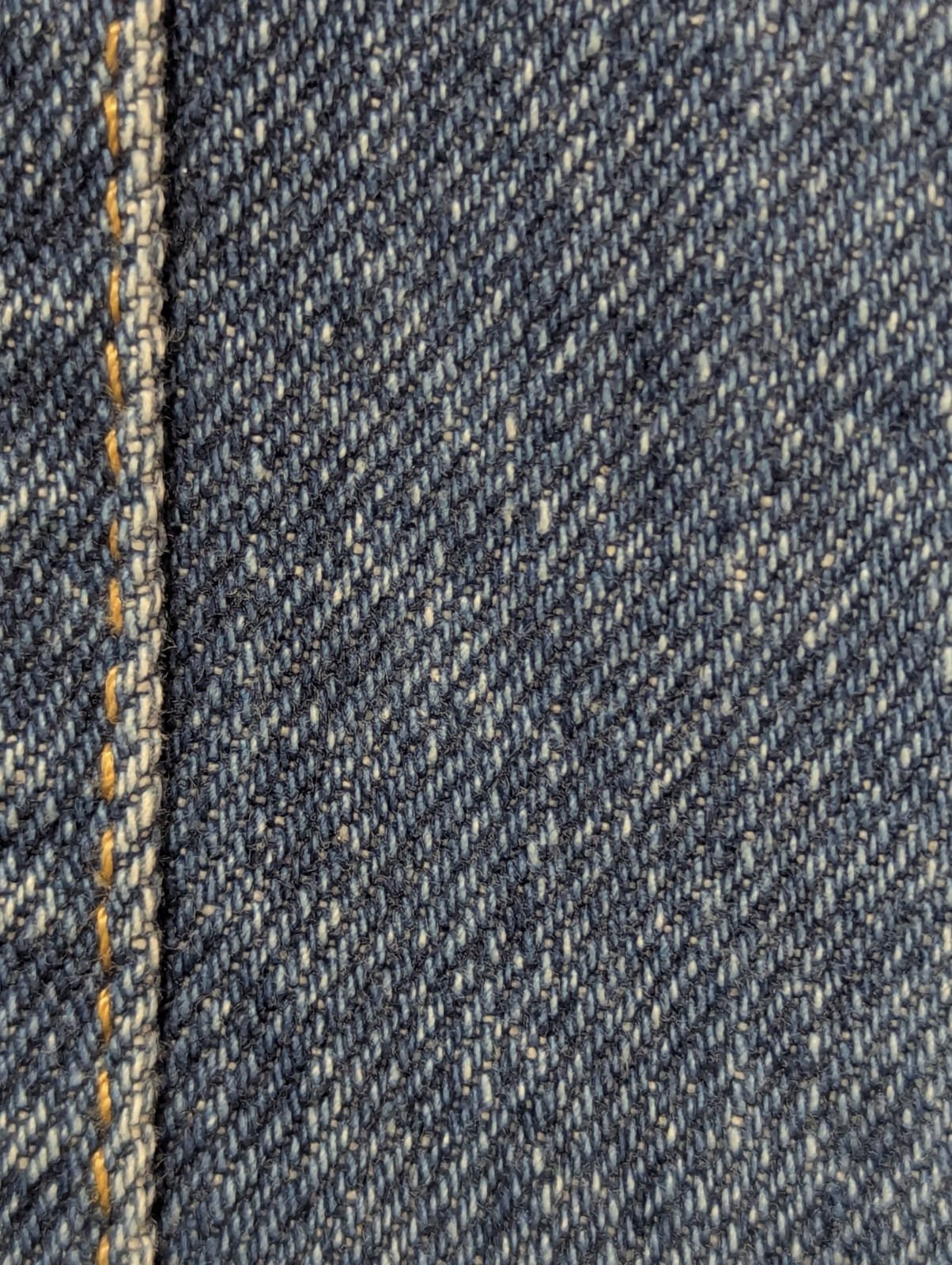
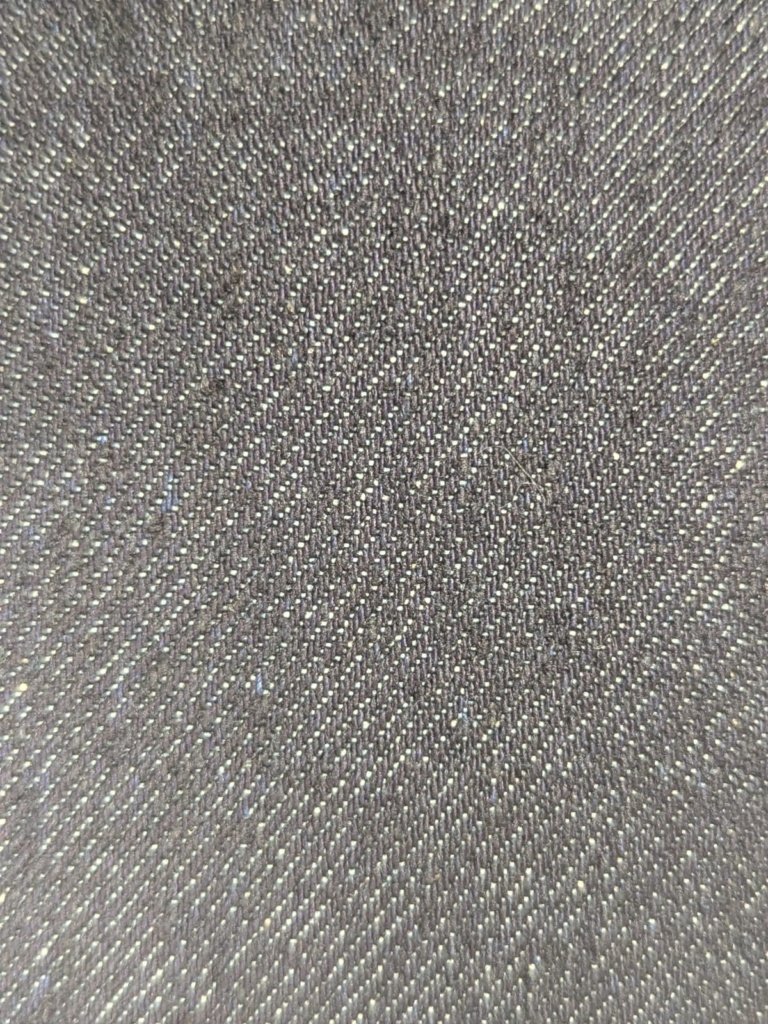
3/1 RHT (Right-Hand Twill) Indigo Denim is a durable twill-woven textile characterized by prominent diagonal lines running from lower left to upper right on the fabric face. It is traditionally constructed with indigo-dyed warp yarns and undyed or lightly dyed weft yarns, creating the characteristic blue face and lighter reverse. The fabric is widely associated with jeanswear and is valued for its durability, dimensional stability, abrasion resistance, and distinctive ageing characteristics.
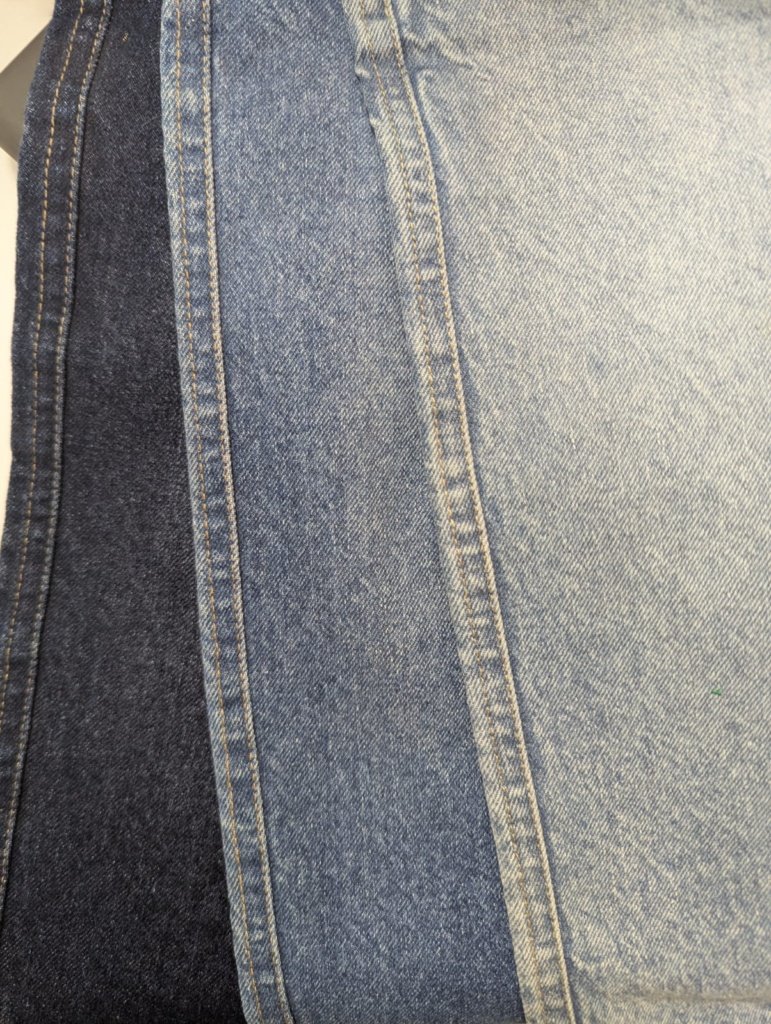
3/1 RHT denim is constructed using a 3/1 twill weave, in which each warp yarn passes over three weft yarns and under one weft yarn. This construction produces a strong, compact fabric with a pronounced right-hand diagonal twill line. The warp yarns are commonly ring-spun cotton and dyed with indigo before weaving, while the weft is generally left un-dyed. Typical denim weights range from approximately 8–14 oz/yd² (270–475 GSM), depending on end use and construction. The fabric generally has a firm hand, good tensile strength, and high resistance to abrasion.
The characteristic indigo color is produced through repeated dipping of the warp yarns in an indigo dyebath followed by oxidation. Unlike yarns dyed through their entire cross-section, indigo penetration is often concentrated toward the outer layers of the yarn, leaving a lighter core. This structure contributes to denim’s distinctive fade development, as abrasion gradually exposes lighter areas during wear and washing.
3/1 RHT denim became one of the defining constructions of modern workwear and jeanswear, particularly through the development of denim production in Europe and North America and its subsequent global adoption. In South Asia, including Bangladesh, denim manufacturing expanded significantly with the growth of the export-oriented apparel industry, making the region an important production base for international denim brands.
Common denim finishing processes include sanforization, mercerization, singeing, calendaring, softening, resin finishing, coating, and various washing treatments. Garment washing techniques such as enzyme wash, stone wash, bleach wash, tinting, and abrasion can further modify colour, hand feel, surface character, and appearance. Finishing selection strongly influences shrinkage, stiffness, stretch recovery, and the final vintage or contemporary aesthetic.
3/1 RHT Indigo Denim is widely used for jeans, denim jackets, skirts, shirts, workwear, uniforms, bags, and other lifestyle products. Its combination of strength, structured appearance, and progressive ageing makes it particularly suitable for garments designed to develop individual character through use.
In a textile museum, 3/1 RHT Indigo Denim represents the relationship between yarn engineering, indigo dyeing, weave construction, garment manufacturing, and consumer culture. It demonstrates how a relatively simple 3/1 twill structure became one of the most influential textile constructions in global fashion history, while its characteristic fading behaviour provides a visible record of wear, movement, and time.