
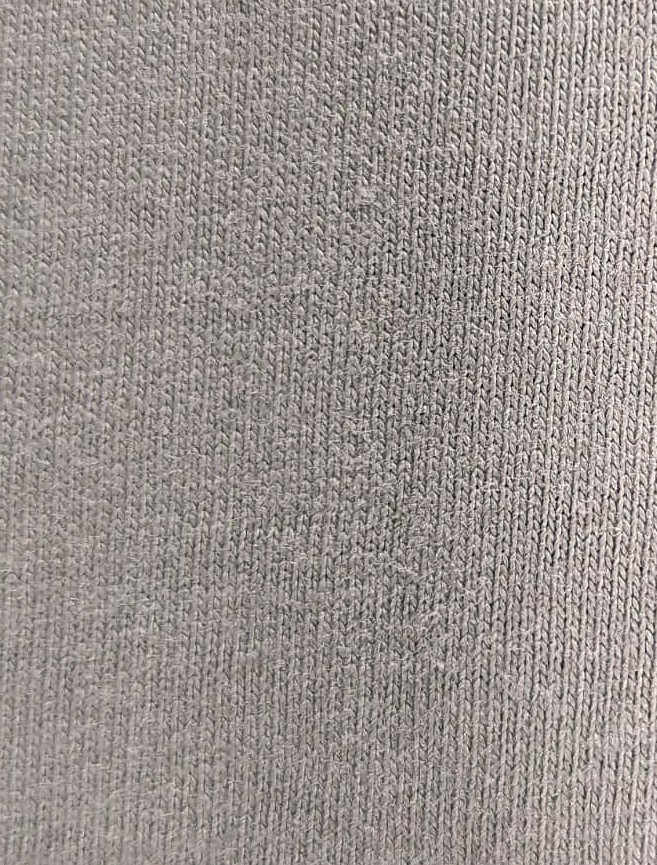
Single Jersey is a lightweight, flexible, and soft knitted fabric characterized by a smooth face and a slightly textured back. It is created using a weft-knit single-loop structure, where each needle forms one loop per course, resulting in a fabric that is stretchy across the width but has limited stretch along the length.
Historically, Single Jersey has been used since the late 19th century with the rise of circular knitting machines in England, originally for undergarments and lightweight apparel. Today, it is widely used for t-shirts, casual wear, linings, and light activewear, favored for its comfort, breathability, and ease of printing or dyeing.
GSM generally ranges from 120–180, making it lighter than Piqué or Fleece. Finishing treatments may include bleaching, dyeing, washing, or enzyme treatments to improve softness, appearance, and performance.
In a textile museum context, Single Jersey illustrates the simplicity and versatility of weft knitting, highlighting how loop structures can produce lightweight, stretchable, and comfortable fabrics for everyday use.