
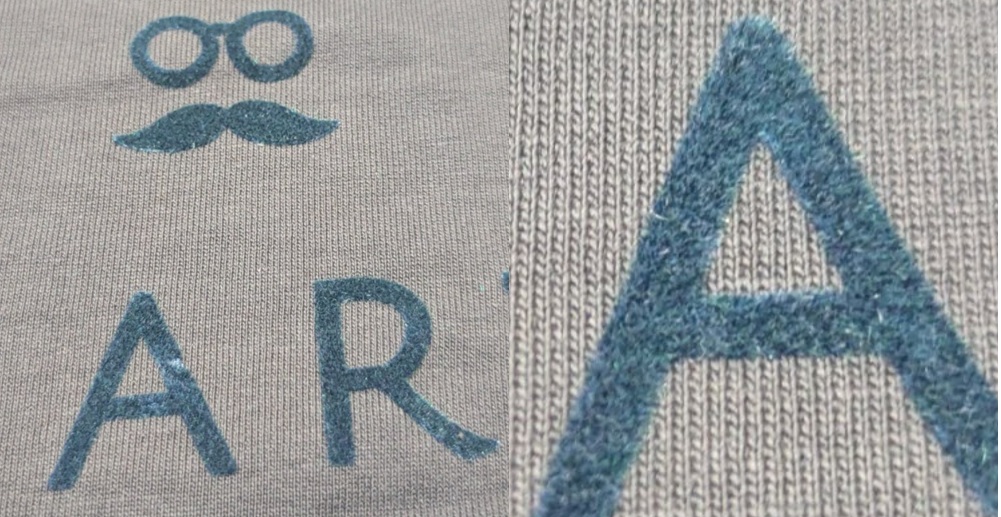
Flock printing is a decorative textile technique in which short fiber particles (flock) are applied to fabric to create a raised, velvety surface texture. Unlike traditional printing, which deposits pigments on the fabric, flock printing produces a tactile effect that combines both visual and physical dimension, often used to enhance aesthetic appeal in apparel, home textiles, and accessories.
The process involves several steps:
- Adhesive Application – A glue or resin is applied in the desired pattern on the fabric surface.
- Flocking – Short fibers (commonly nylon, polyester, or rayon) are electrostatically or mechanically applied to the adhesive.
- Curing – The adhesive is cured through heat or UV light to secure the fibers firmly.
- Finishing – Excess fibers are removed, leaving a soft, dense, and raised motif.
Key technical parameters include:
- Fiber length: 0.3–1 mm (short fibers for fine detail)
- Adhesive type: water-based, solvent-based, or heat-activated
- Fabric compatibility: cotton, polyester, blends, or leather substitutes
Flock printing is widely used in sweatshirts, t-shirts, decorative home textiles, upholstery, and accessories. It allows designers to create velvet-like textures, logos, patterns, and tactile motifs without complex weaving or embroidery.
In textile education and museum collections, flock printing illustrates the integration of material science, adhesive technology, and surface engineering in creating raised, decorative textile surfaces, bridging traditional embellishment techniques and modern industrial applications.