
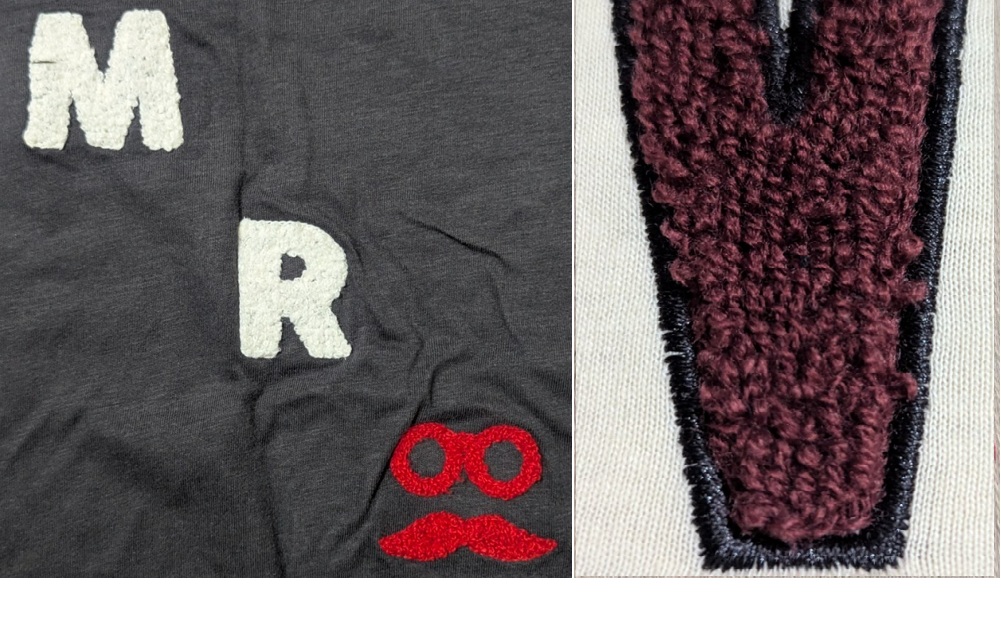
Towel embroidery is a specialized surface embellishment technique applied to fabrics, characterized by looped pile construction. Unlike embroidery on flat woven or knit fabrics, towel embroidery requires careful control of stitch density, underlay structure, and stabilization due to the uneven, absorbent surface created by pile loops.
Terry towels are generally produced using cotton ring-spun or combed yarns, with GSM typically ranging from 350–700 GSM depending on end use. The loop height and pile density significantly influence embroidery performance. To prevent stitch sinking into the pile, a water-soluble topping film is placed above the fabric during embroidery, while a stabilizer backing is applied underneath to maintain dimensional control.
Common stitch types used in towel embroidery include:
- Satin stitch (for lettering and logos)
- Tatami / fill stitch (for solid areas)
- Underlay stitch (to compress pile before top stitching)
Thread selection is critical; polyester embroidery thread is preferred for its durability, color fastness, and resistance to frequent washing. Needle size and machine speed must be optimized to avoid loop damage or fabric distortion.
Towel embroidery is widely used in hospitality textiles, corporate gifting, promotional branding, bath linens, spa products, and home décor collections. It enhances perceived product value while maintaining functional absorbency when properly engineered.
Within textile education and museum collections, towel embroidery demonstrates the technical adaptation of machine embroidery to high-pile substrates, reflecting the integration of structural textile knowledge with decorative surface engineering in modern home textile production.