
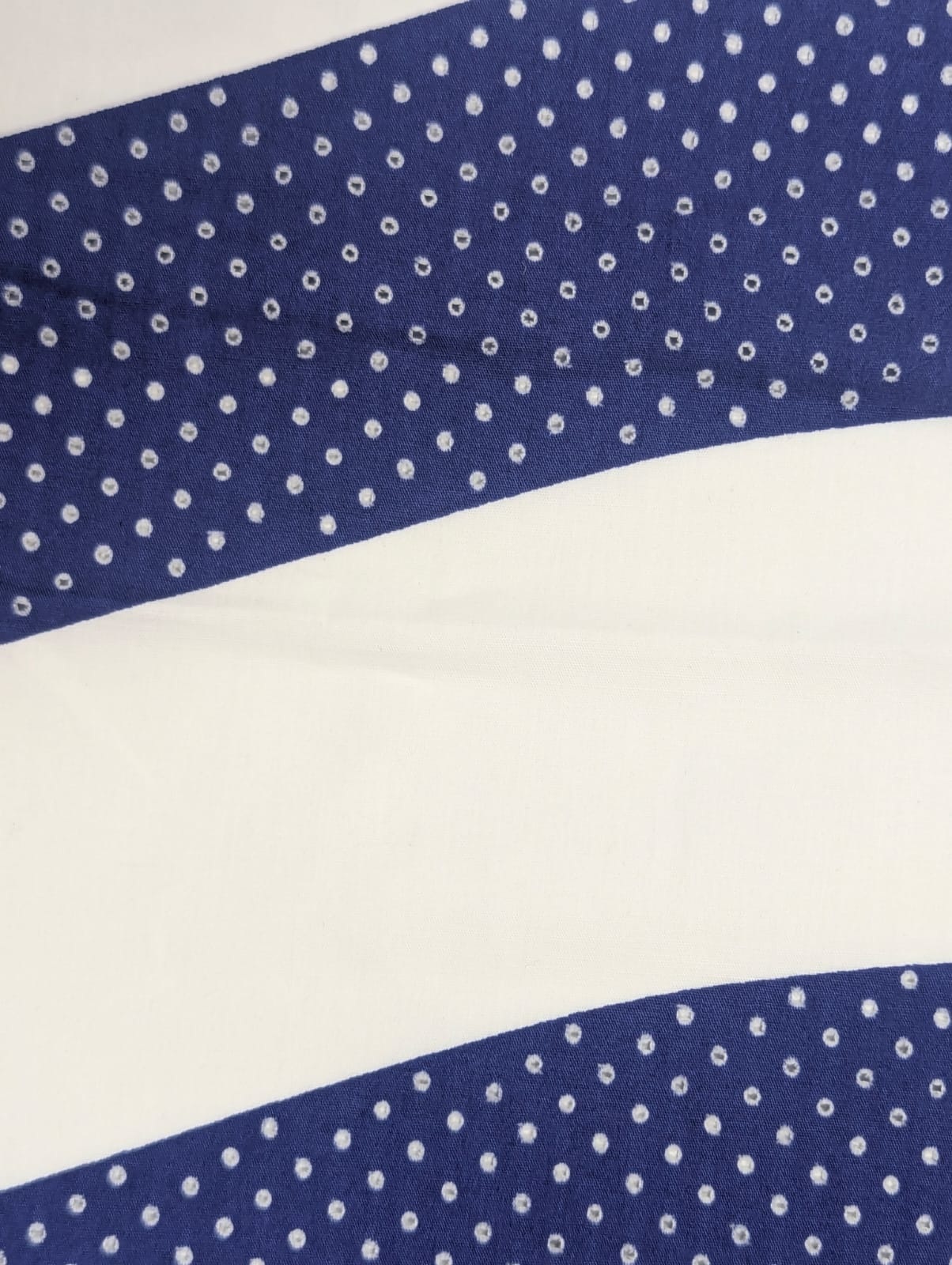
Swiss Dot Fabric, also known as Dotted Swiss, is a lightweight woven textile characterized by small, evenly spaced raised dots formed through extra yarn insertion, embroidery techniques or clip weaving techniques. Unlike printed polka dots, the motifs are structurally integrated into the fabric, creating a subtle three-dimensional surface texture or hole.
Typically produced in cotton, voile, lawn, or lightweight blends, Swiss Dot fabrics generally range between 80–150 GSM. The base construction is usually plain weave, offering softness, breathability, and fluid drape, while the raised dots add delicate ornamentation without increasing fabric weight significantly.
Historically popular in Europe during the 18th and 19th centuries, Swiss Dot became associated with children’s wear, summer dresses, blouses, and romantic fashion aesthetics. It remains a timeless decorative fabric in contemporary apparel.
In a textile museum context, Swiss Dot demonstrates how structural embellishment within lightweight woven fabrics enhances visual interest while maintaining functional delicacy. It represents the integration of decorative weaving techniques into everyday apparel textiles.