
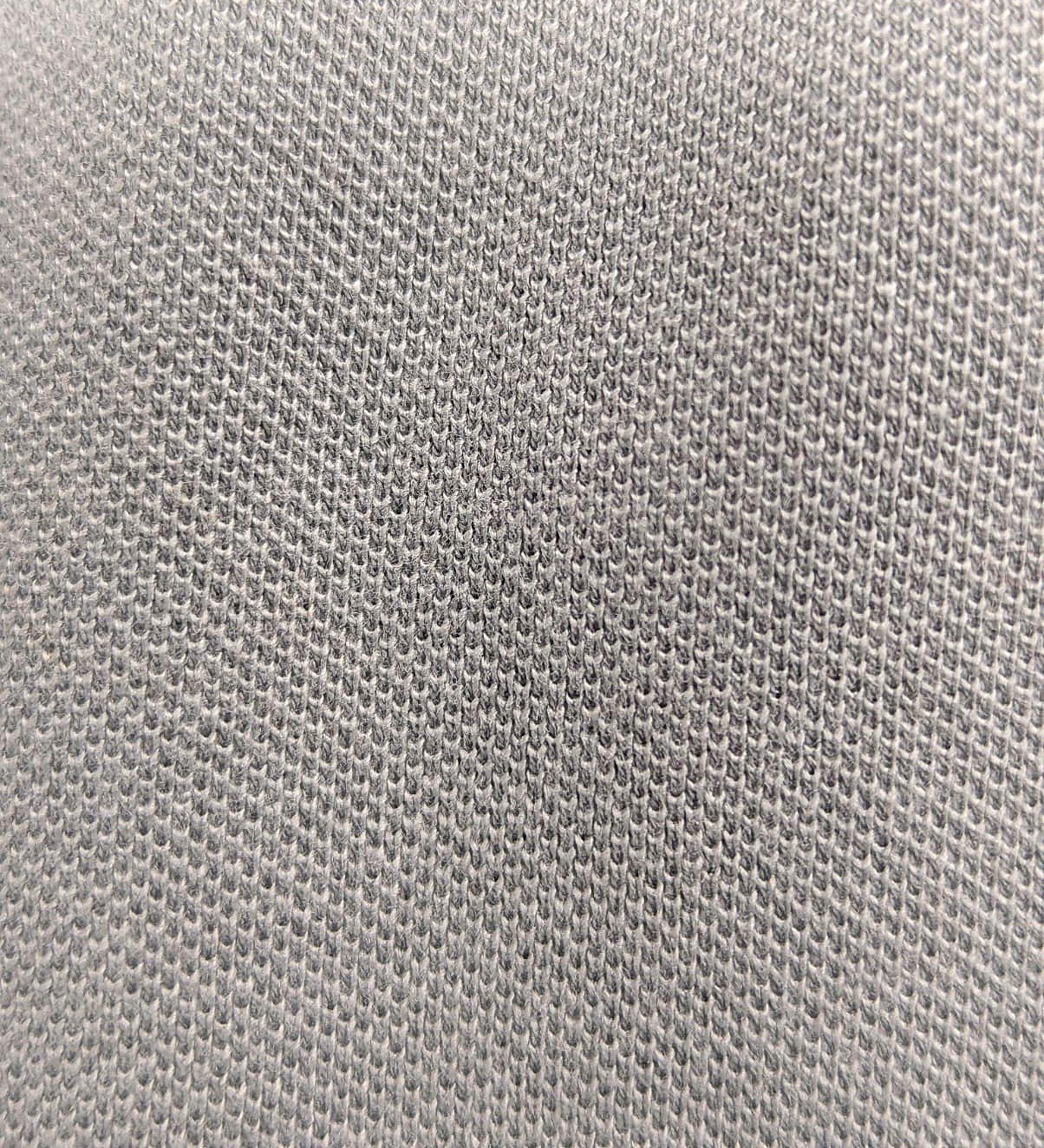
Piqué is a durable, textured woven or knitted fabric recognized for its raised, geometric patterns, such as waffles, honeycombs, or cords, which give the material both visual depth and structural stability. Its name comes from the French word piquer, meaning “to quilt” or “to prick,” reflecting the fabric’s distinctive surface created through specialized weaving or knitting techniques.
Historically, Piqué emerged in 18th–19th century France and England, initially used for formal menswear, shirts, and waistcoats, valued for its crisp hand and elegant texture. Modern Piqué is most commonly weft-knitted (often using a double knit structure) for polo shirts, sportswear, and casual apparel, combining breathability, durability, and stretch.
GSM typically ranges from 180–300, making it heavier than standard single jersey knits but lighter than canvas or heavier woven fabrics. Finishing treatments may include mercerization, dyeing, or moisture-wicking coatings to enhance luster, colorfastness, and performance.
In a textile museum context, Piqué demonstrates the interplay of texture, weave/knit engineering, and functional design, showing how aesthetic patterns can enhance both visual appeal and garment performance.