
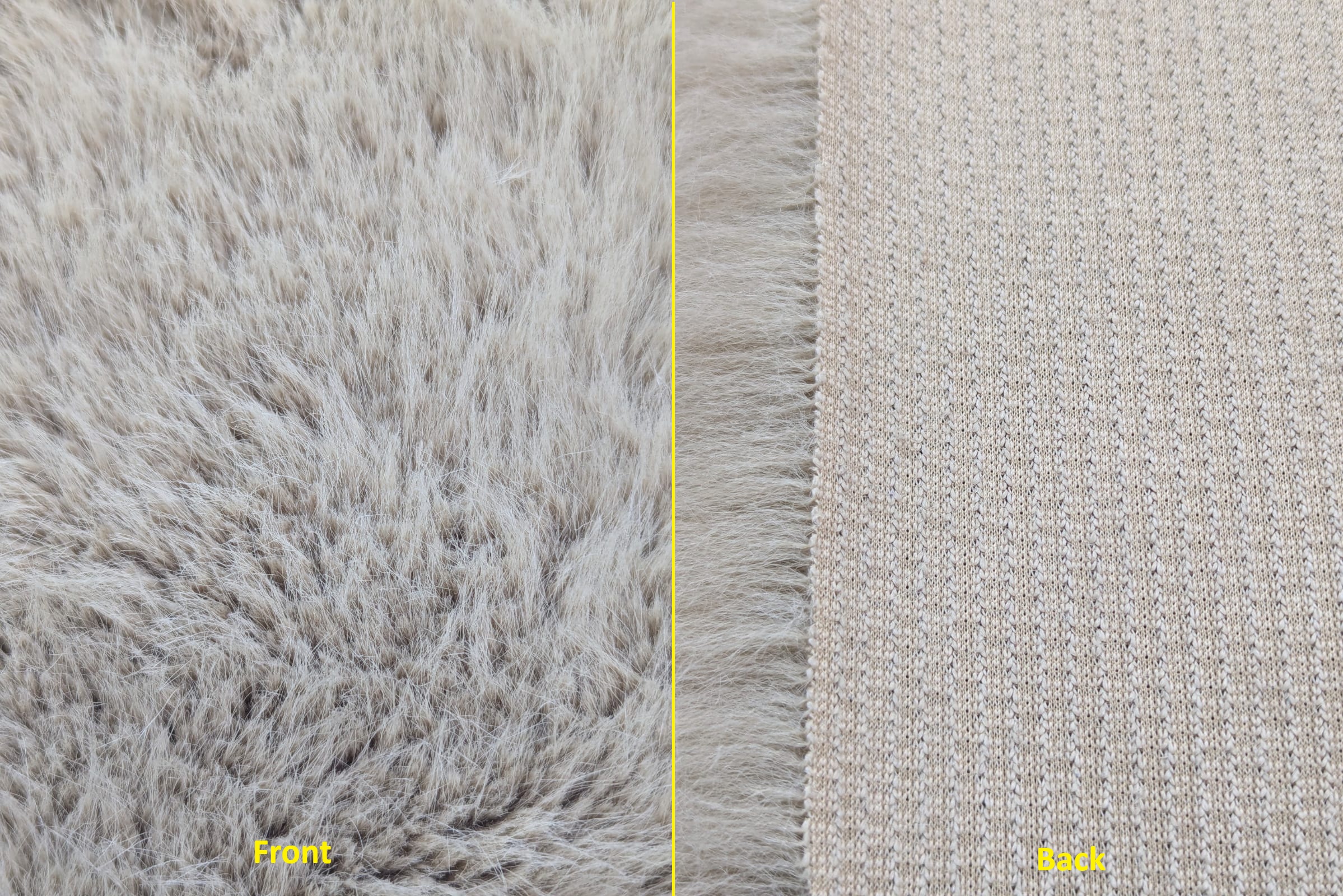
Sherpa is a soft, warm, and plush textile known for its insulating properties and wool-like appearance. Its origins trace back to the traditional garments of the Sherpa people of the Himalayas, who for centuries (dating back at least to the 15th–16th century) used handspun wool and sheepskin to craft warm clothing suitable for high-altitude climates. The fabric’s modern version emerged in the mid-20th century, around the 1950s–1960s, when synthetic fibers like polyester were introduced to mimic natural wool and sheepskin for mass production.
Typically made from polyester, or blends of cotton and synthetic fibers, Sherpa features a high-pile, looped, or napped surface on one or both sides, creating a thick, fleecy texture that traps air for insulation. GSM ranges from 250–600 depending on the application, making it suitable for outerwear, linings, blankets, and cozy apparel. Its soft hand, resilience, and warmth revolutionized casual and functional clothing during the late 20th century, especially for outdoor and winter wear.
Finishing treatments—including anti-pilling, water-repellent coatings, and shearling effects—enhance its durability and aesthetic appeal. In a textile museum context, Sherpa illustrates the adaptation of traditional warmth-focused textiles into modern industrial fabrics, highlighting the intersection of cultural heritage, fiber innovation, and contemporary functional design.