
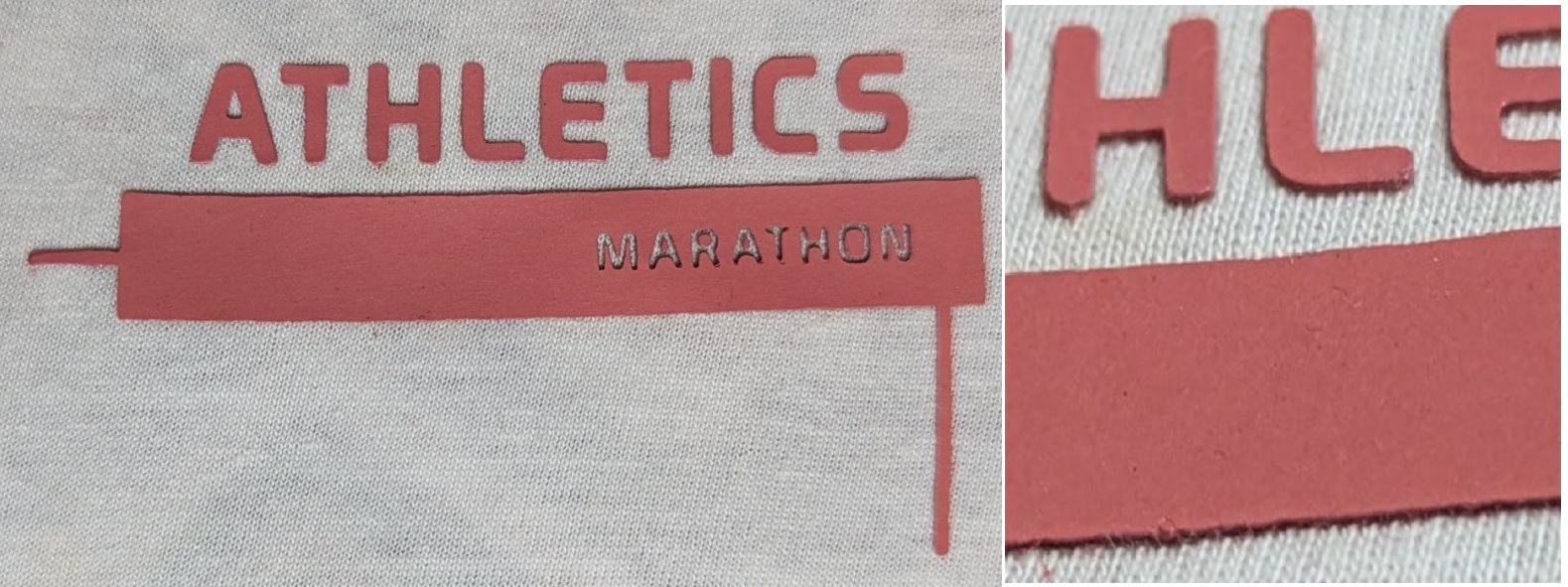
High-Density Print is a specialized screen-printing technique that creates a raised, three-dimensional surface effect by depositing thick layers of high-viscosity plastisol ink onto fabric. Unlike standard flat prints, this method builds vertical height through controlled stencil thickness and multiple ink passes, producing a structured and tactile finish.
The process uses a high-build emulsion stencil on the screen, allowing greater ink deposition per stroke. The ink is typically PVC-based plastisol, engineered for high viscosity and structural stability. Print height generally ranges from 0.3 mm to 1.5 mm, depending on mesh count, stencil thickness, squeegee pressure, and curing conditions.
High-density printing requires precise control of:
- Mesh selection (lower mesh count for thicker ink laydown)
- Squeegee hardness and angle
- Flash curing between layers (if multi-layered)
- Final curing temperature (usually 160–170°C for plastisol stabilization)
The technique is compatible with cotton, cotton-blends, fleece, and jersey fabrics, particularly in knitwear and sportswear applications. Due to its structured finish, it is widely used for logos, typography, streetwear graphics, and premium branding elements.
From a product development perspective, high-density print enhances visual depth, perceived garment value, and brand differentiation while maintaining cost efficiency compared to embroidery or true additive 3D printing.
In textile education and museum collections, high-density print demonstrates how manipulation of ink rheology, stencil engineering, and curing chemistry can transform conventional screen printing into a dimensional surface technique within modern apparel manufacturing.