
The zipper is one of the most significant fastening inventions in modern textile and garment history, enabling fabrics to be securely joined while allowing easy opening and closing. Its development took place over several decades through the contributions of multiple inventors. The earliest concept dates to 1851, when Elias Howe, the inventor of the sewing machine, patented a device called the Automatic, Continuous Clothing Closure. Although innovative, Howe never commercialized the invention.
A more practical step toward the modern zipper came in 1893, when American engineer Whitcomb Judson introduced a hook-and-eye fastener known as the “Clasp Locker.” Designed primarily for fastening boots and shoes, the device was displayed at the 1893 World’s Fair in Chicago. Despite its novelty, it suffered from reliability issues and did not achieve commercial success.
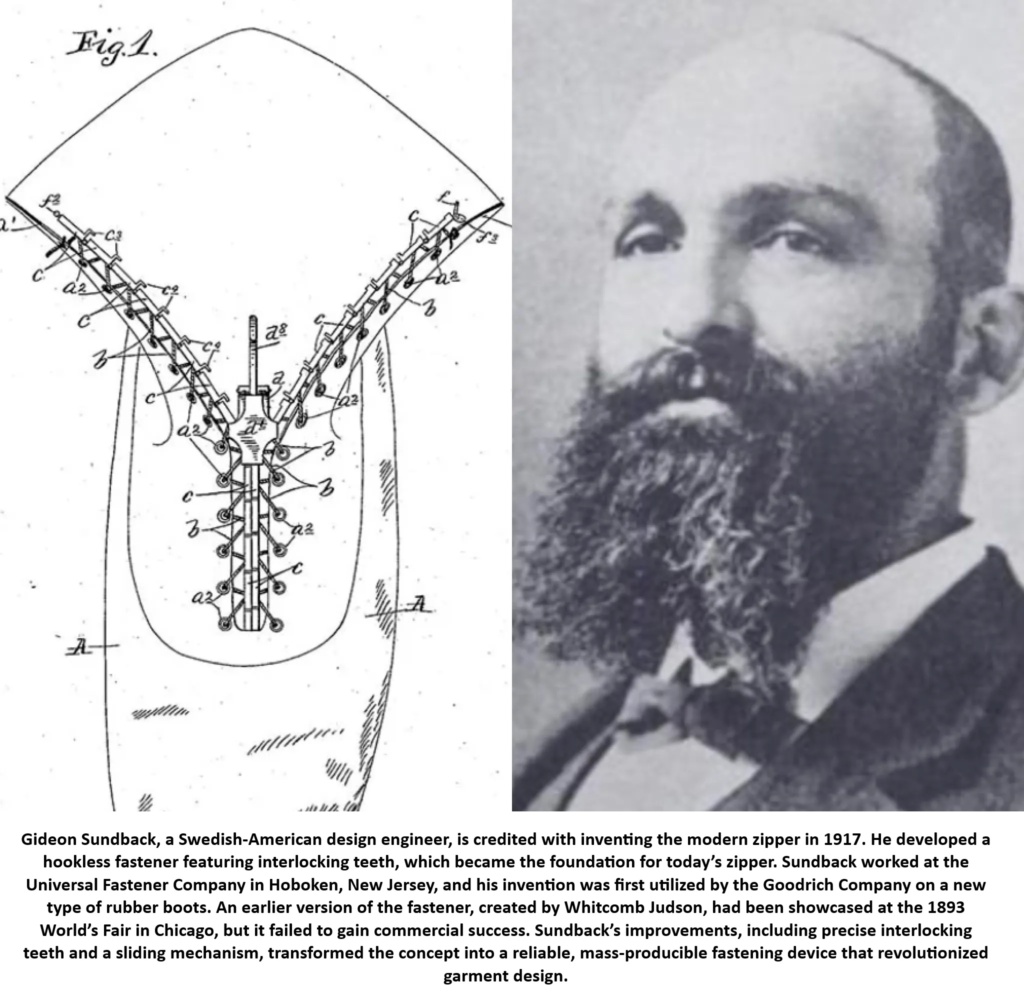
The breakthrough occurred in 1913 when Gideon Sundback, a Swedish-American design engineer working at the Universal Fastener Company in Hoboken, New Jersey, redesigned the mechanism. Sundback developed the “Separable Fastener,” featuring rows of precisely engineered interlocking metal teeth and a sliding mechanism that could smoothly join or separate them. His improved design was patented in 1917, marking the birth of the modern zipper. The B.F. Goodrich Company soon adopted Sundback’s fastener for a new line of rubber boots, helping introduce the technology to a wider market.
Over time, zippers expanded into various garment applications. By the 1930s, they were widely used in trousers, dresses, jackets, and coats, gradually replacing buttons and hooks due to their speed, convenience, and secure closure.
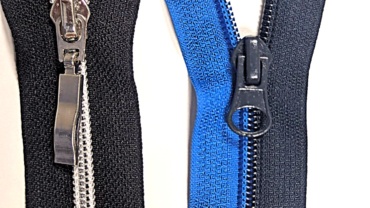
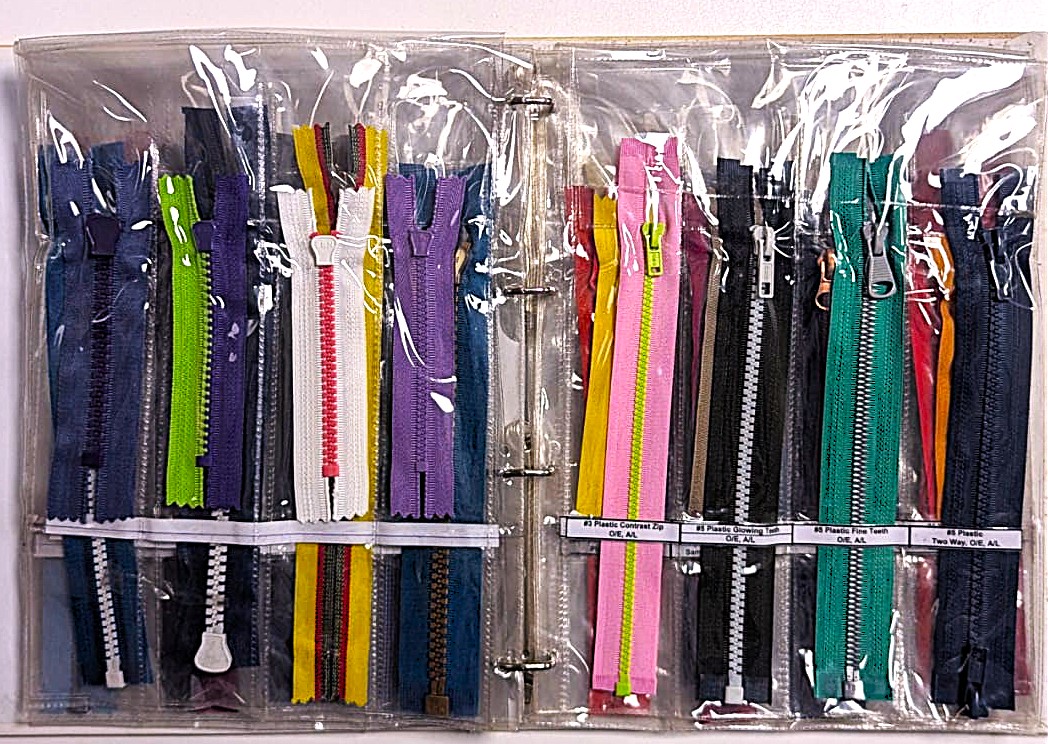
Technically, a zipper consists of three main components: teeth or coils, a slider, and textile tape. The teeth may be made from metal, molded plastic, or nylon coil, depending on strength, flexibility, and design requirements.
In textile history, the zipper represents a remarkable intersection of mechanical engineering, materials science, and garment design, demonstrating how a small innovation transformed the functionality and aesthetics of modern clothing.