
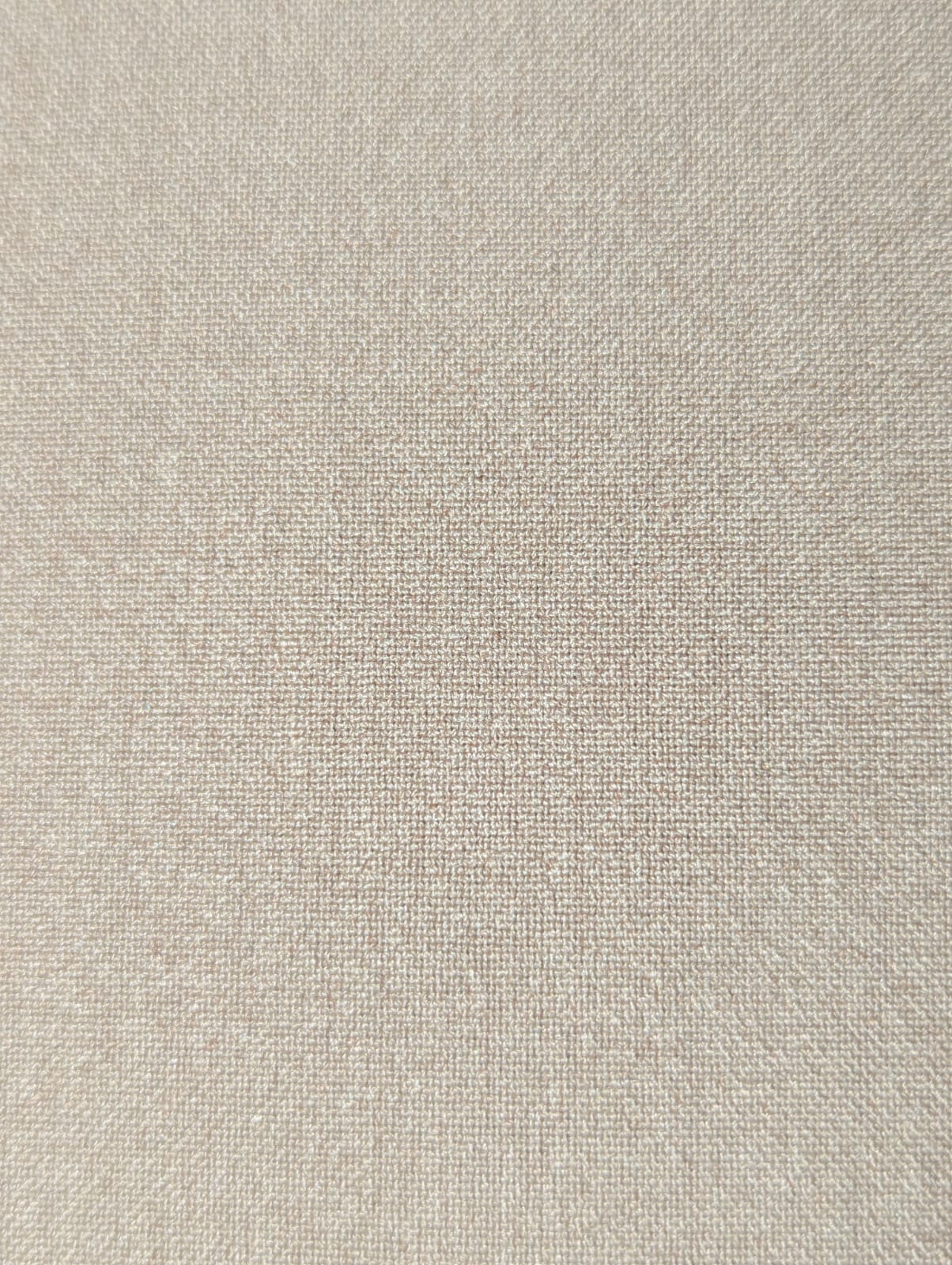
Poplin is a plain-weave woven fabric known for its smooth surface, subtle horizontal rib effect, and balanced performance. It is constructed using a 1/1 plain weave, where fine warp yarns are set at a higher density than the slightly thicker weft yarns. This difference in yarn count creates poplin’s characteristic ribbed texture while maintaining a clean and even fabric face.
Modern poplin is most commonly produced from 100% cotton, although blends with polyester, silk, wool, or elastane are also used depending on the end application. Typical yarn counts range from 40s–80s Ne in warp and 30s–60s Ne in weft, with a fabric weight generally between 90–170 GSM. The fabric offers high breathability, moderate to high tensile strength, controlled drape, and good resistance to abrasion and pilling.
Poplin accepts dyes and prints exceptionally well and is often finished through mercerization, calendering, and pre-shrinking to enhance appearance and dimensional stability. It is widely used for shirts, uniforms, dresses, children’s wear, and bed linens. In textile education and museum collections, poplin represents a foundational woven fabric that clearly demonstrates the impact of yarn structure and thread density on fabric performance.