
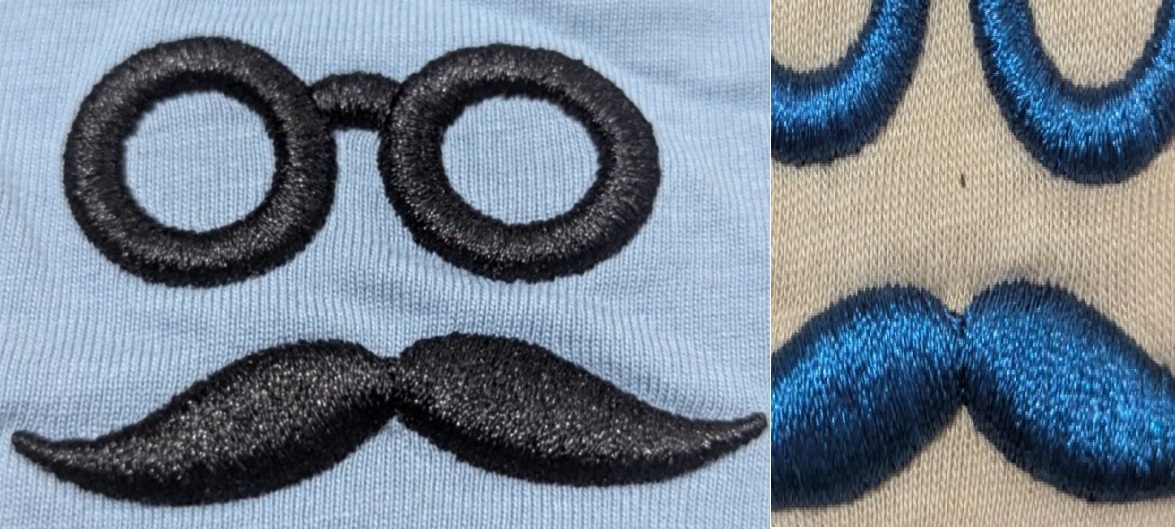
3D embroidery is a dimensional surface embellishment technique that creates raised, sculptural motifs on fabric through controlled stitch density, padding materials, and layered construction. Unlike flat embroidery, which remains surface-level, 3D embroidery introduces height and structural depth, enhancing both visual impact and tactile quality.
The most common method is puff (foam) embroidery, where a polyurethane foam layer—typically 2–4 mm thickness—is placed beneath high-density satin stitches. The excess foam is trimmed or heat-sealed after stitching, leaving a clean, elevated motif. Other methods include corded embroidery, padded underlay construction, and multi-layer appliqué systems, where felt, cording, or structured textile bases are used to build dimensional form.
Technically, stitch density generally ranges from 0.35–0.50 mm, depending on yarn type and desired elevation. Threads are primarily polyester or rayon filament, with occasional use of metallic or specialty yarns for decorative effects. Production is executed on multi-head computerized embroidery machines, where digitizing software controls underlay structure, pull compensation, stitch angle, and density to prevent distortion or thread breakage.
3D embroidery is compatible with structured base fabrics such as denim, twill, fleece, jersey, and caps fabric panels. Fabric stability plays a critical role in achieving clean dimensional results, often requiring backing materials or stabilizers to maintain form during stitching.
In apparel manufacturing, 3D embroidery is widely applied in caps, sportswear branding, outerwear logos, streetwear graphics, premium denim patches, and corporate identity uniforms. It enhances perceived garment value, strengthens brand visibility, and supports product differentiation in competitive retail markets.
Within textile education and museum collections, 3D embroidery represents the intersection of traditional needlework heritage—such as Nakshi Kantha—and modern digital textile engineering. It demonstrates how stitch structure, material selection, and machine precision influence surface architecture and functional performance in contemporary apparel production.