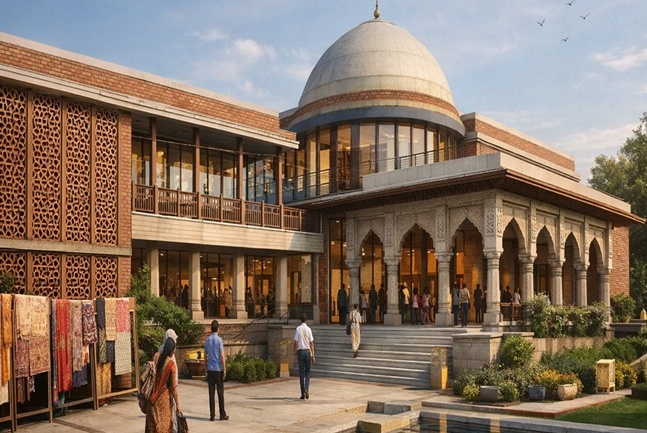

A Curatorial & Technical Perspective from Texheritage Bangladesh Museum
Introduction: A Living Textile Civilization
Jamdani is one of the most refined handloom systems in the world, where weaving, mathematics, and cultural memory converge through human skill rather than machines.
Historical Timeline (Years & Evolution)
c. 15th–16th Century
- Early forms of fine muslin weaving emerge in Bengal delta region
- Dhaka and Sonargaon develop as key weaving centers
17th Century (Mughal Era Peak)
- Jamdani formalizes as a distinct decorative muslin category
- Royal patronage from Mughal courts accelerates refinement
- Persian linguistic influence shapes the term “Jamdani”
- Jam = flower
- Dani = container / vase
18th–19th Century
- Global export expansion through European trading routes
- British colonial industrial policies disrupt handloom economy
- Decline begins due to mill-made fabric competition
20th Century
- Survival within rural artisan clusters (Narayanganj, Rupganj, Sonargaon)
- Knowledge transmission remains oral and familial
2013
- UNESCO declares Traditional Jamdani Weaving as
Intangible Cultural Heritage of Humanity
Present Day
- Revival through designer collaborations, museums, and sustainable fashion demand
- Bangladesh positioned as global Jamdani production hub
Jamdani Weaving System — Technical Parameter Model
1. System Definition
Jamdani can be modeled as:
J = f(B, W, M, L, H)
Where:
- B = Base weave system (plain weave muslin foundation)
- W = Warp system parameters
- M = Motif insertion logic (extra weft discontinuous system)
- L = Loom configuration (handloom pit system)
- H = Human operator dependency (manual control variables)
2. Input Parameters (Engineering Variables)
A. Yarn Parameters
- Warp yarn count (Ne): 60s – 300s+ (historically muslin-grade up to extreme fineness)
- Weft base yarn count: 40s – 120s cotton
- Extra weft motif yarn: variable (often same as base or slightly heavier for visibility)
- Twist factor (T): low twist for softness + drape control
B. Structural Geometry Parameters
- Warp density (EPI): 180 – 400+ ends/inch
- Weft density (PPI): 120 – 250 picks/inch
- Fabric width (Wf): typically 36–48 inches (traditional loom constraint)
- Interlacement pattern: 1/1 plain weave base matrix
C. Motif System Parameters
- Motif density (Md): low to ultra-high (context-dependent)
- Motif distribution model: non-periodic / semi-ordered / memory-based placement
- Motif size range: 5 mm – 150 mm scale variation
- Extra weft insertion frequency (If): discontinuous event-based function
D. Process Control Parameters
- Weaving operators: 2-person system (weaver + assistant for motif insertion)
- Shuttle system: manual bamboo stick / needle insertion
- Tension control (Tc): fully manual, real-time correction
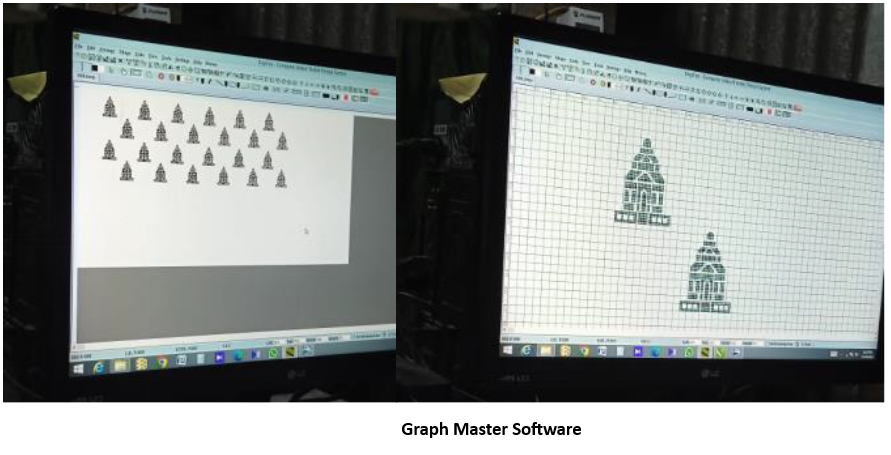
- Pattern reference system: mental mapping (no digital or punch-card encoding)
3. Functional Constraints
| Constraint Type | Description |
|---|---|
| Structural constraint | Must maintain plain weave integrity under high warp density |
| Cognitive constraint | Motif placement depends on human memory precision |
| Mechanical constraint | No continuous jacquard or automated shedding system |
| Productivity constraint | Limited by human insertion speed per pick cycle |
| Error sensitivity | High (single miscount affects motif geometry integrity) |
4. Output Performance Metrics
A. Production Efficiency
- Output rate:
- Simple design: ~1–2 cm/hour
- Medium complexity: ~0.5–1 cm/hour
- Dense Jamdani: <0.5 cm/hour
- Total cycle time:
- Simple: 2–3 weeks
- Medium: 1–2 months
- Complex: 3–6+ months
B. Structural Quality Indicators
- Fabric fineness index (FI): High (muslin-grade range)
- Motif clarity index (MCI): Dependent on insertion precision
- Drape coefficient: Very high (due to fine yarn + loose motif distribution)
- Air permeability: High (despite density due to discontinuous motif logic)
5. System Interpretation (Engineering View)
Jamdani operates as a:
Human-driven, discontinuous extra-weft insertion system layered over a high-density plain weave substrate
It can be classified as:
- Non-algorithmic textile system
- Memory-encoded manufacturing process
- Low-throughput, high-information-density fabric architecture
Here is an expanded, museum-grade motif taxonomy you can directly integrate into your Jamdani archive under Texheritage.
Core Motif Categories (Expanded Jamdani Motif Lexicon)
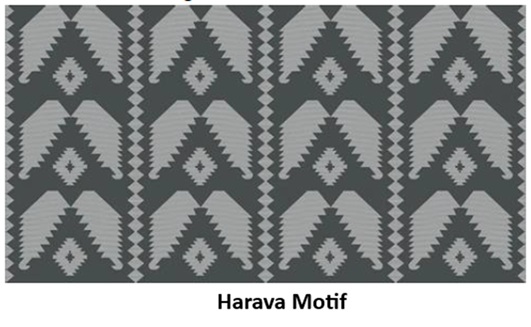
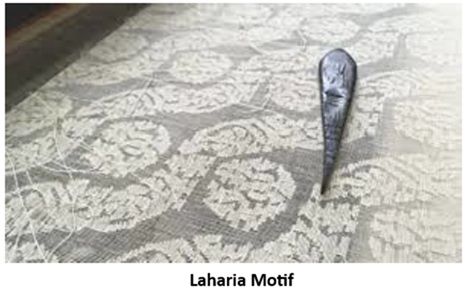
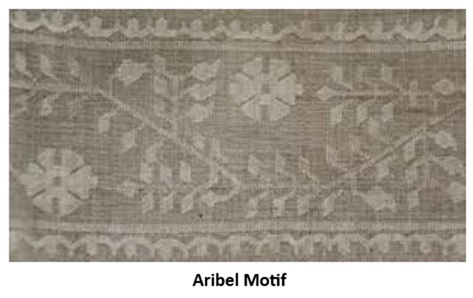
From a textile engineering and curatorial classification perspective, Jamdani motifs can be grouped into nature-inspired, geometric, cultural-symbolic, and hybrid structural systems. Below is a more comprehensive motif index used in traditional weaving clusters of Dhaka–Sonargaon region.
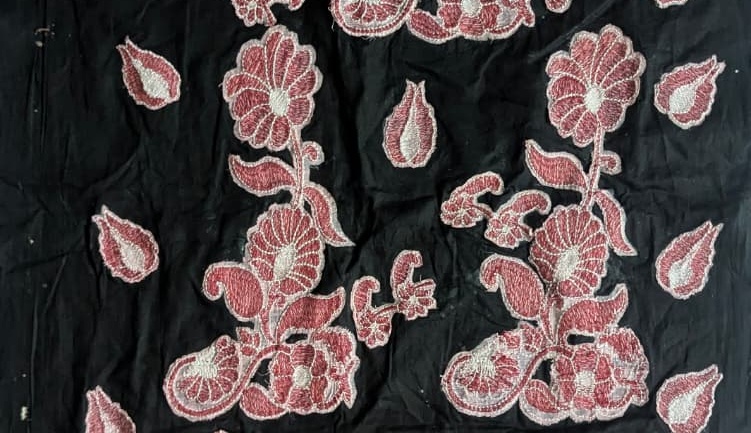
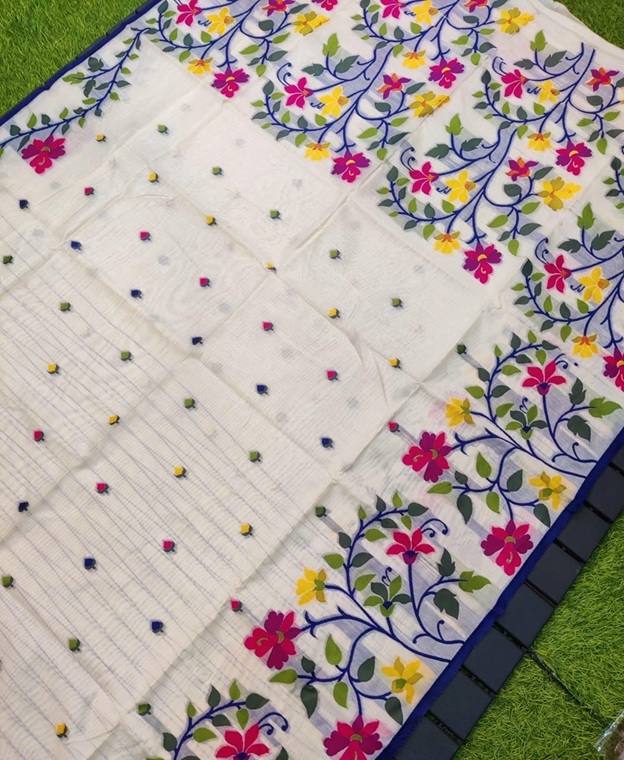
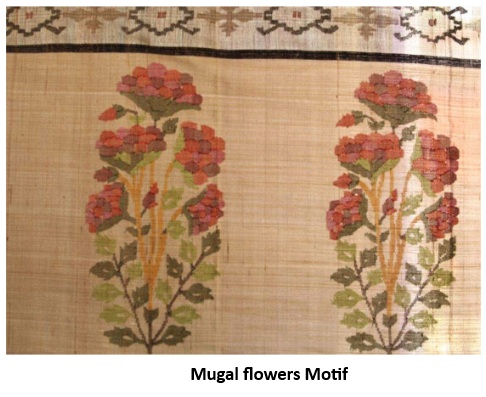
1. Floral Motif System (Natural Botanic Language)
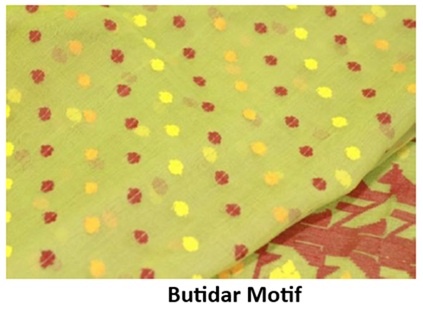
- Buti (small scattered floral dot motif)
- Butidar (dense floral scatter field)
- Ful (generic flower motif)
- Pankhuri (petal structures)
- Champa Phool (frangipani flower)
- Golap (rose-inspired motif)
- Padma (lotus motif, sacred symbolism)
- Krishnochura (flame tree flower)
- Kamini Flower
- Bela Flower (night jasmine)
- Palash Flower (forest flame bloom)
Design logic:
Organic repetition with controlled spacing variability, simulating natural botanical dispersion.
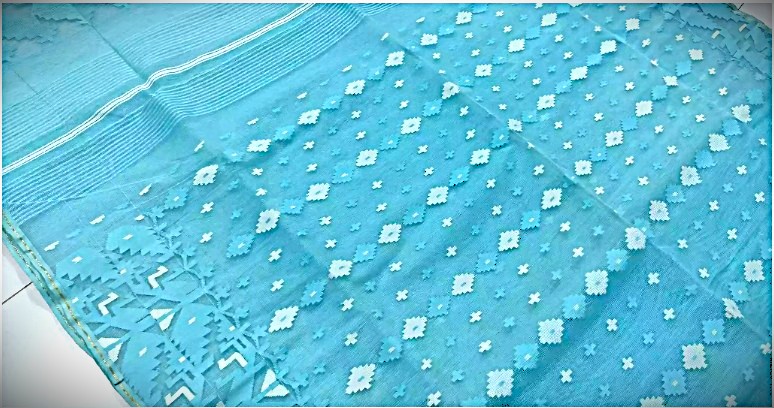
2. Geometric & Structural Motifs (Mathematical Weave Logic)
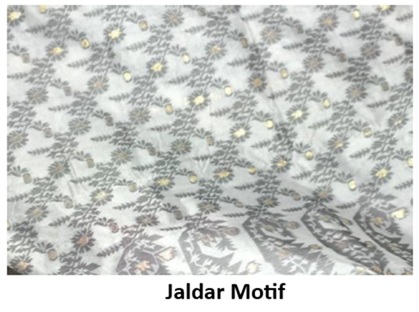
- Jalar (net / lattice structure)
- Tara (star motif)
- Chand (moon circular geometry)
- Chokor (square grid units)
- Diamond / Rhombus repeat system
- Chevron / Zigzag rhythm lines
- Wave / River flow geometry
- Spiral micro-patterns
- Hexagonal mesh units
- Step-pattern alignment (stair geometry)
Design logic:
Based on warp-count symmetry, optical rhythm, and tessellation principles.
3. Paisley & Organic Flow Motifs (Cultural Synthesis Group)
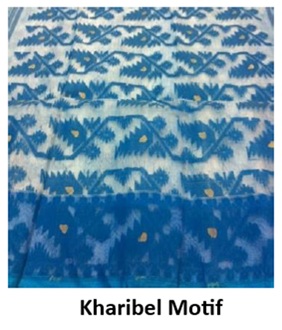
- Kalka (paisley / mango seed motif)
- Mango Leaf (Aam Pata)
- Mango Blossom variation clusters
- Vine scroll patterns (Lata motif)
- Creeper systems (Lata-pata extension)
- Curvilinear arabesque forms
- Flame-shaped teardrop variants
Design logic:
Persian-influenced curvature merged with Bengal botanical abstraction.
4. Aquatic & Riverine Motifs (Bengal Delta Identity)
- Machh (fish motif)
- Fish scale repeat pattern
- River wave lines
- Boat silhouette motif
- Net (Jaal / fishing net abstraction)
- Water ripple geometry
- Lotus-in-water compositions
- Delta flow linear structures
Design logic:
Represents Bengal’s river-based civilization and ecological dependency on water systems.
5. Fauna-Inspired Motifs (Living Ecosystem Reference)
- Pakhi (bird motifs)
- Peacock feather abstraction
- Parrot stylization
- Duck / waterfowl silhouette motifs
- Butterfly micro-motifs
- Elephant symbolic forms (rare ceremonial textiles)
- Insect-inspired micro geometry
Design logic:
Symbolic representation of freedom, fertility, and natural movement.
6. Cultural & Symbolic Motifs (Ritual & Social Meaning)
- Kalash (sacred pot)
- Temple arch motifs
- Mosque dome-inspired geometry
- Mandala-inspired circular systems
- Wedding ceremonial motifs
- Royal court pattern references
- Festival celebration grids
- Heritage insignia repeats
Design logic:
Reflects spiritual identity, rituals, and ceremonial textile usage.
7. Classic Jamdani Named Motif Systems (Traditional Classification)
- Panna Hazar (thousand jewel repetition system)
- Tercha (diagonal directional flow)
- Duria (dot-based scattered system)
- Anchari (border-focused motif banding)
- Jangla (dense all-over vegetation system)
- Charkona (four-corner structural motif logic)
- Shapla Jaal (water lily net system)
Design logic:
These are system-based weaving classifications rather than single motifs — often defining entire fabric structure.
Curatorial Note (Texheritage Classification View)
Within the Jamdani archive of Texheritage, motifs are not treated as decoration alone, but as:
- Data systems of cultural memory
- Encoded ecological references of Bengal delta
- Hand-executed mathematical patterns without machines
- Oral-design knowledge transferred through generations
Final Interpretation
Jamdani motifs form a living design language system, where:
- Nature becomes geometry
- Culture becomes pattern
- Memory becomes structure
- And hand becomes machine
Each motif is not just woven — it is computed by the mind and executed by the hand on the loom.