
By Texheritage Bangladesh: Museum, Innovation & Preservation
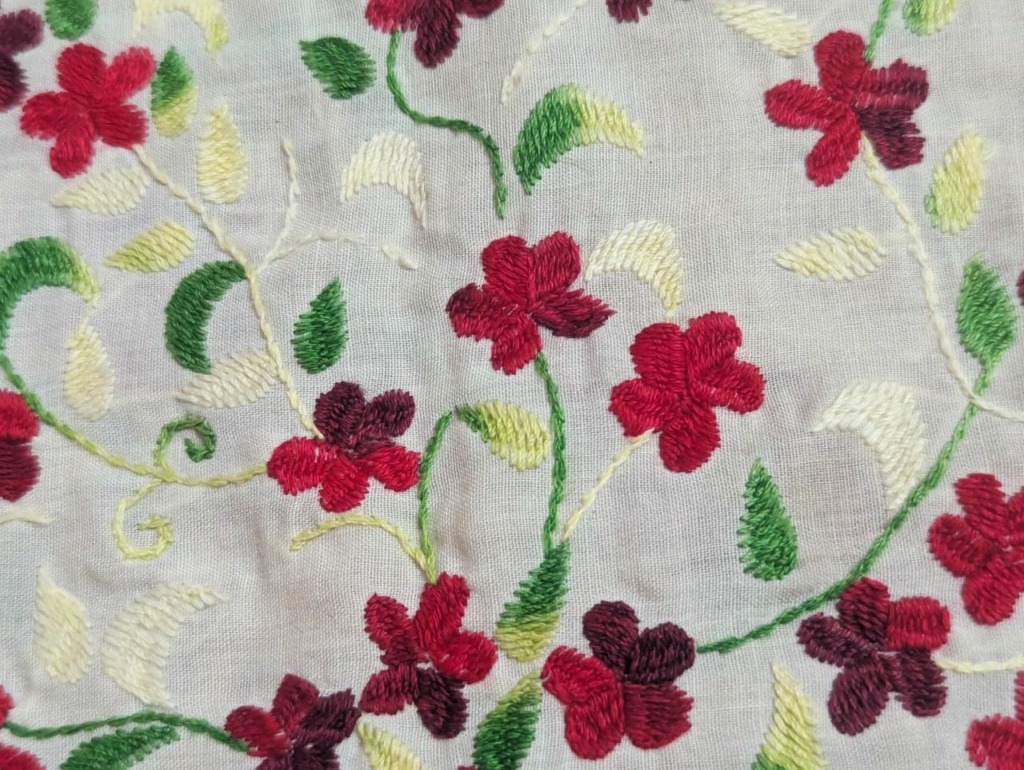
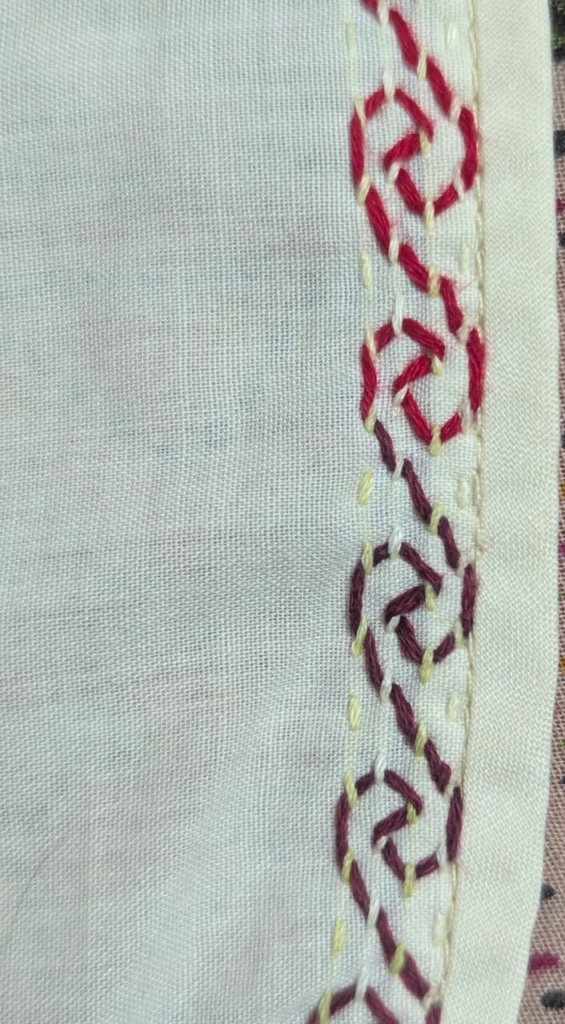
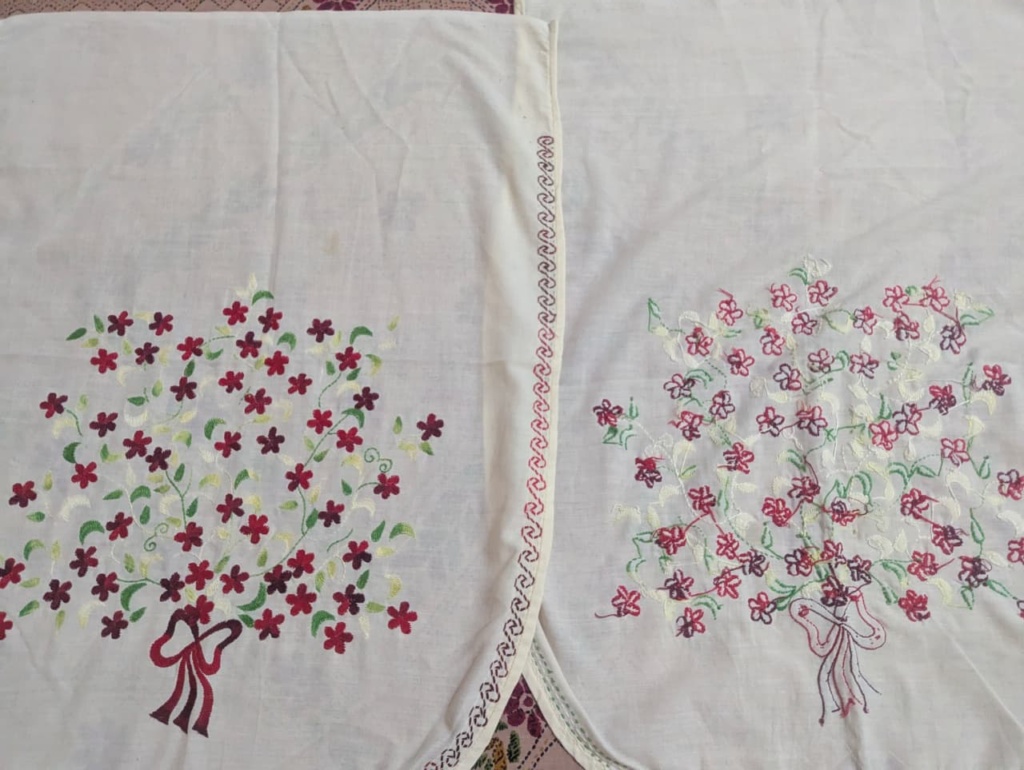
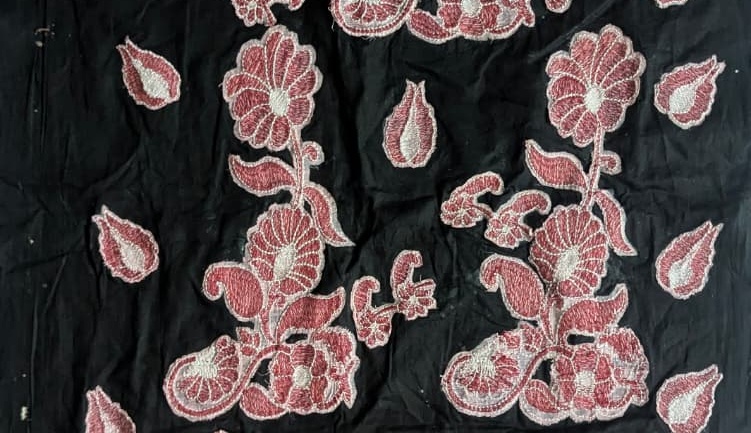
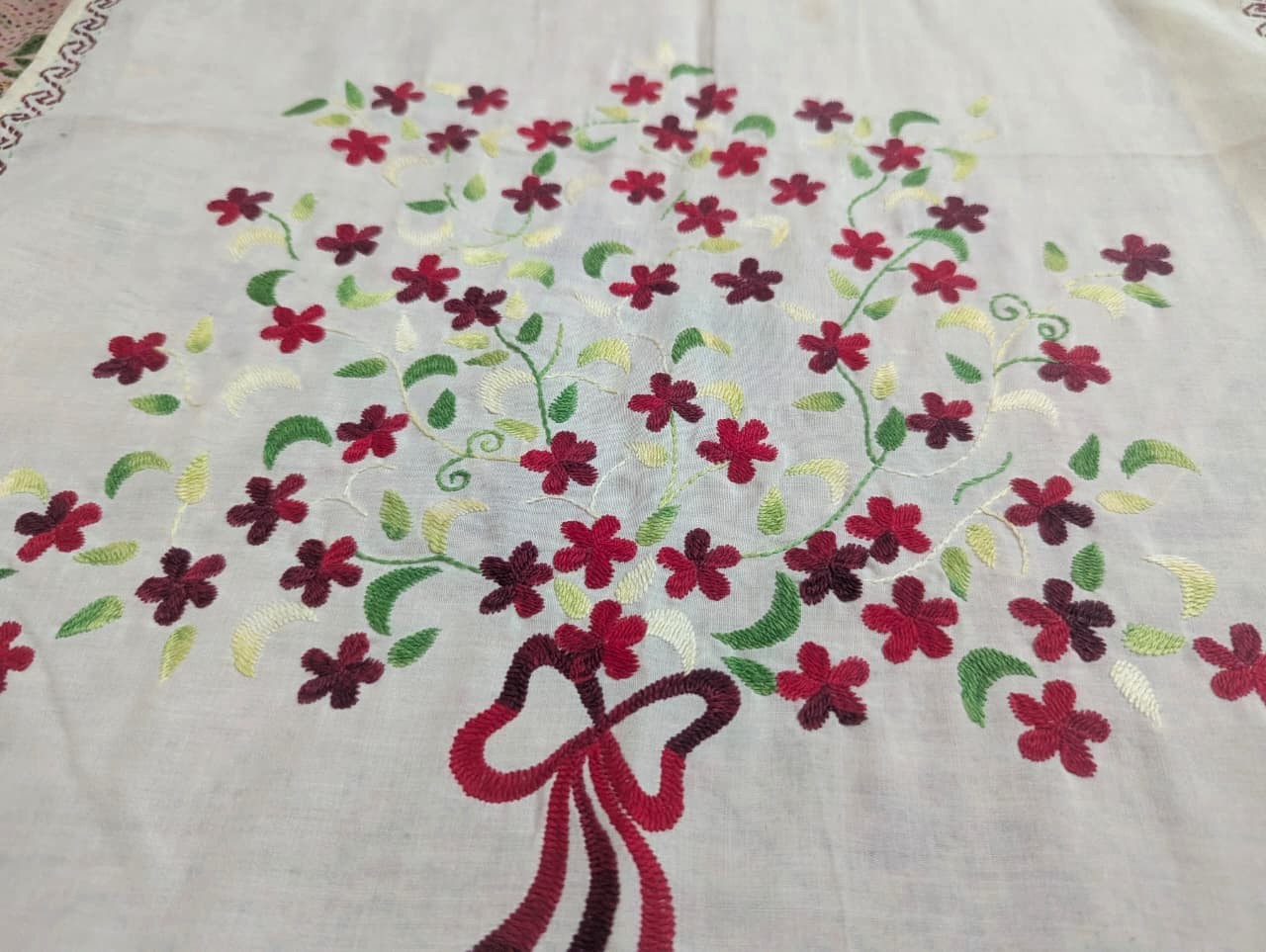
This embroidered textile artifact from the 1990s reflects the rich tradition of South Asian domestic craftsmanship and handmade surface decoration. Developed on a lightweight cotton plain-weave fabric, the piece features floral vine motifs executed through hand embroidery techniques using satin stitch and directional thread filling. The vibrant combination of red, burgundy, cream, and green embroidery threads demonstrates the aesthetic sensibility and decorative practices commonly found in household textiles during the late twentieth century. Such embroidered fabrics were widely used in home décor, garments, dowry collections, and cultural gifting traditions across the region.
Technical Analysis
* Fabric Structure: Base fabric appears to be a lightweight plain-weave cotton construction. Balanced yarn interlacement indicates stable dimensional behavior suitable for decorative applications.
* Embroidery Technique: Predominantly satin stitch embroidery with directional filling methods. Hand-controlled stitch variation confirms manual production rather than computerized embroidery. Layered stitch density creates raised texture and visual depth within floral motifs.
* Color & Thread Observation: Multi-tone thread application used for floral shading and motif definition.
* Design Composition: Repetitive floral vine layout demonstrates symmetrical spacing and rhythmic motif placement. Organic motif flow reflects traditional South Asian ornamental design principles commonly seen in domestic textiles.
* Condition & Preservation Notes: Fabric shows moderate creasing associated with aging and storage conditions. Embroidery integrity remains structurally stable with minimal visible thread loss. Slight discoloration on the ground fabric indicates oxidation and long-term environmental interaction.
From a textile research and conservation perspective, this artifact offers valuable insight into:
• Traditional embroidery techniques
• Domestic artisan culture
• Decorative craft evolution before digital embroidery expansion
• Stitch engineering and surface ornamentation methods
• Textile aging and preservation behavior
The slight irregularities in stitch formation and motif alignment highlight the authenticity of hand-crafted production, preserving the human touch often absent in modern embroidery systems.
At Texheritage Museum, preserving and documenting these textiles contributes to safeguarding Bangladesh’s cultural memory and supports future research in textile heritage, conservation science, material culture, and design history.