
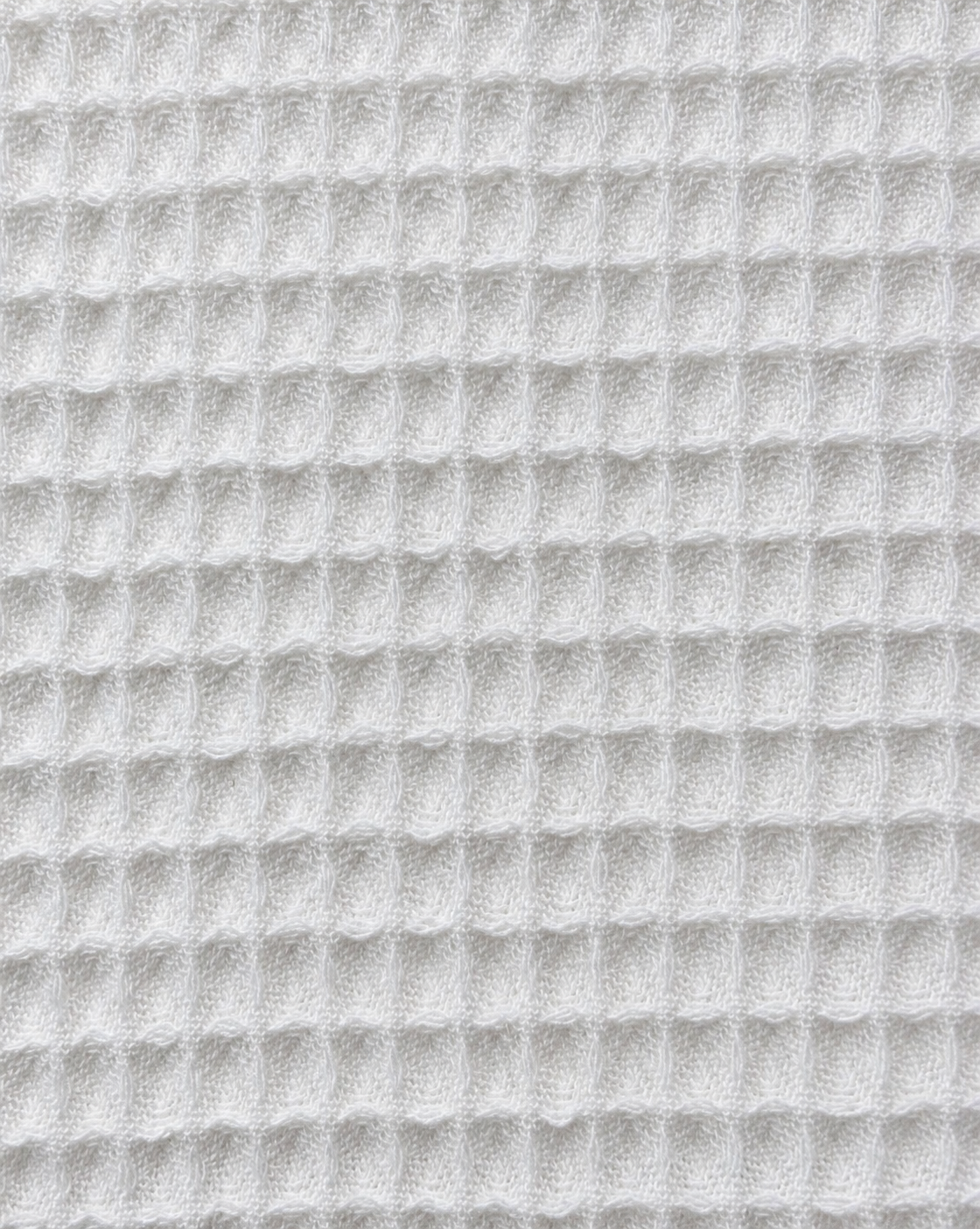
Waffle Woven Fabric, also known as Honeycomb Fabric, is a functional, three-dimensional textile characterized by its cellular surface structure formed through controlled weave engineering. Unlike surface-treated fabrics, this material achieves its performance through construction—creating a grid of recessed and raised squares that resemble a waffle pattern. Typically made from 100% cotton, this fabric is valued for its high absorbency, breathability, lightweight bulk, and natural comfort, making it widely applicable in both apparel and home textiles.
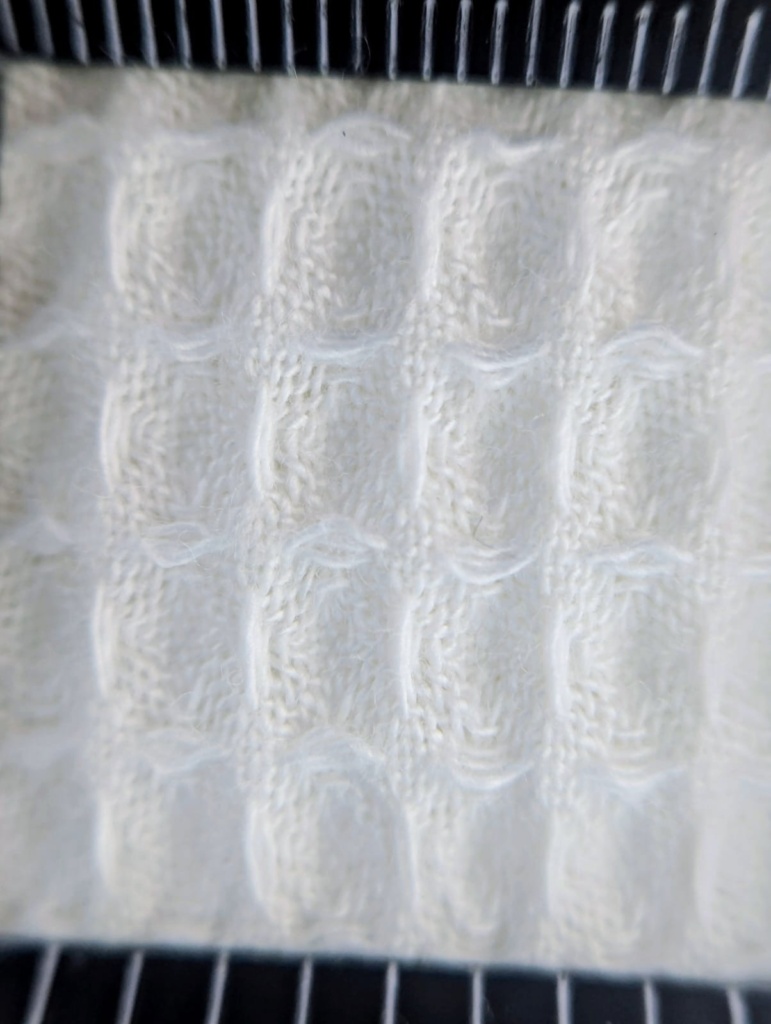
Waffle Woven Fabric is constructed using a cellular or honeycomb weave, which is a derivative of plain weave enhanced through strategic float placement and tension variation. In this sample, the construction is approximately 85 × 69 with a yarn count of 20s × 2, where plied yarns contribute to improved stability and volume. The interlacing of warp and weft yarns creates a three-dimensional texture with visible depressions (cells) and raised edges. This geometry increases surface area, allowing the fabric to absorb moisture efficiently while maintaining airflow. The structure also traps air within the cells, providing natural thermal insulation without increasing weight. With a soft finish—likely achieved through enzyme and softener treatments—the fabric offers a comfortable hand feel while retaining its structural definition.
The origin of waffle weave can be traced back to early European textile development, particularly in linen-based household fabrics before the 18th century. With the advancement of weaving technologies during the Industrial Revolution in England (circa 1760–1820), more complex weave structures like honeycomb became commercially viable. By the 19th century, waffle fabrics were widely adopted in bath textiles due to their superior absorbency. In the mid-20th century, their application expanded into apparel, especially in thermal garments and casualwear. In the modern era, waffle fabrics have gained renewed relevance through sustainable textile development, incorporating organic cotton and recycled fibers.
Common finishing processes include enzymatic treatment for surface smoothness, softening for enhanced comfort, and pre-shrinking to improve dimensional stability. The cotton composition ensures breathability, biodegradability, and compatibility with eco-friendly processing methods. The fabric’s structure reduces reliance on heavy chemical finishes, aligning well with sustainable production practices.
Waffle Woven Fabric is widely used in loungewear, T-shirts, thermal tops, athleisure garments, towels, bathrobes, and kitchen textiles. Its ability to balance functionality with comfort makes it suitable for both performance-oriented and lifestyle-driven product categories.
In a textile museum context, Waffle Woven Fabric represents the evolution of weave engineering as a tool for functional innovation. It demonstrates how structural design—rather than chemical enhancement—can deliver performance attributes such as absorbency, insulation, and breathability. This fabric stands as a strong example of how traditional weaving knowledge continues to influence modern textile development, bridging utility, sustainability, and contemporary market demands.