
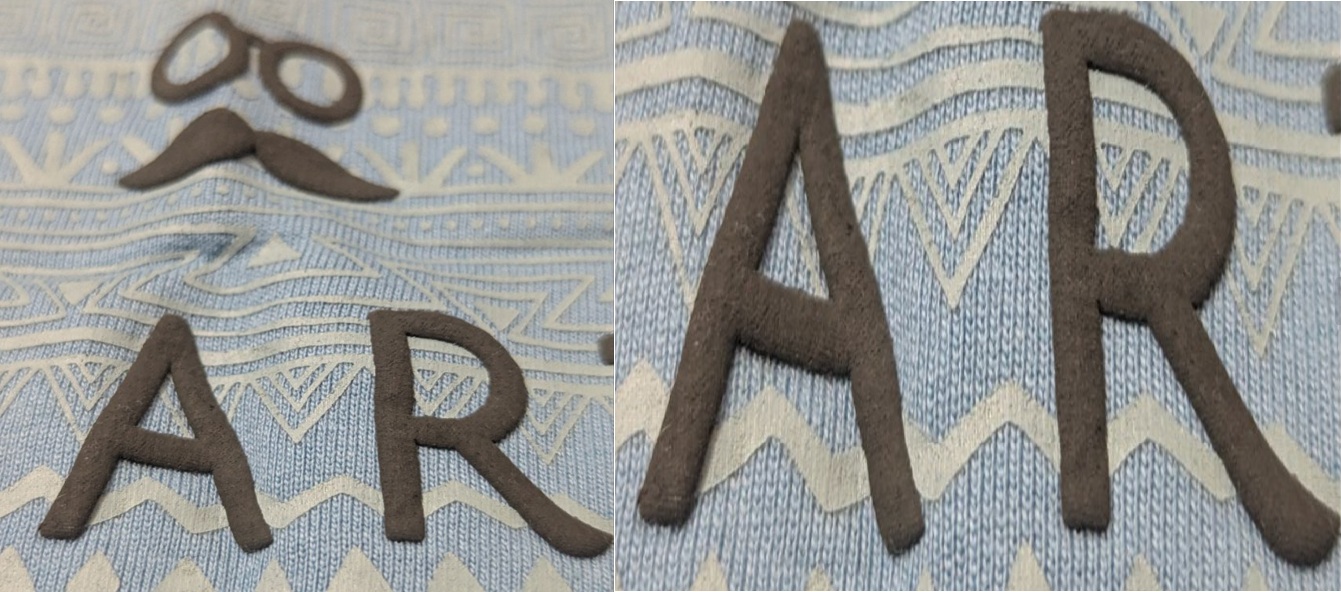
Puff printing is a specialty screen-printing technique that creates raised, three-dimensional effects on fabric using expandable or heat-reactive inks. When cured under heat, the ink expands, producing a soft, puffy texture that adds both visual depth and tactile interest to garments and textiles.
Key technical aspects include:
- Ink Type: PVC-based, acrylic, or polyurethane puff inks
- Curing Temperature: Typically 150–170°C, adjusted for fabric type
- Substrate Compatibility: Cotton, cotton blends, polyester, and knit fabrics
- Height: Expansion can range 0.5–2 mm, depending on ink formulation and curing conditions
Puff print is commonly applied to t-shirts, hoodies, sweatshirts, sportswear, and promotional items, offering designers a cost-effective way to create dimensional graphics without embroidery. Multi-layered puff prints can produce more intricate 3D effects and combined textures.
From a technical and museum perspective, puff printing illustrates how heat-activated ink chemistry, textile compatibility, and curing control can transform conventional flat printing into a raised surface technique, bridging decorative creativity and industrial production methods.