
By Texheritage-Bangladesh: Museum, Innovation & Preservation Foundation
Fashion is often described as cyclical—but in reality, what returns is not just style, but meaning. Khadi is one of those rare textiles where history, politics, craftsmanship, and identity are all woven into a single fabric.
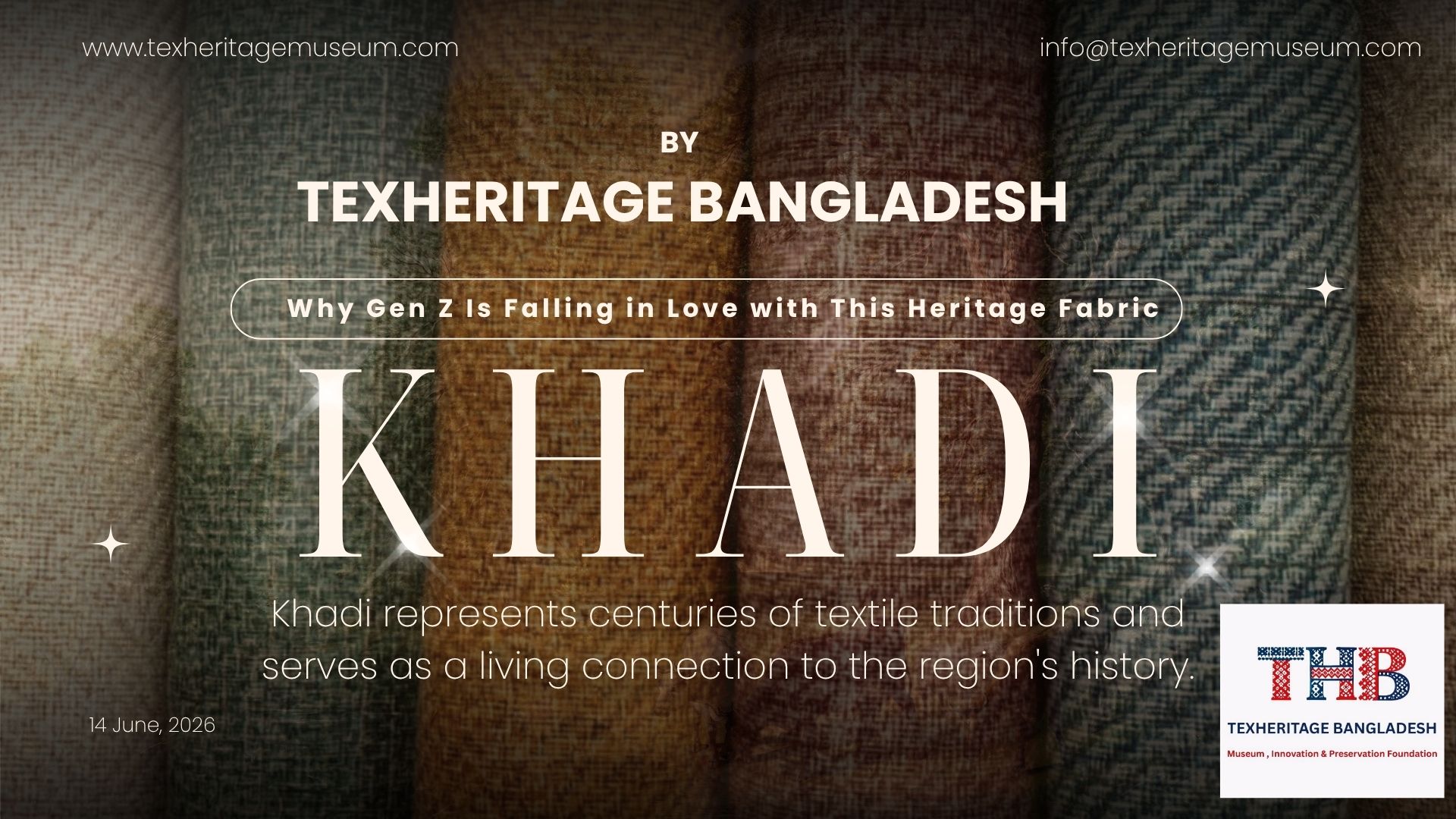
Once considered a simple hand-spun cloth, Khadi has evolved into a powerful cultural symbol and is now experiencing a global revival among Gen Z as part of the sustainable and slow fashion movement.
What is Khadi?
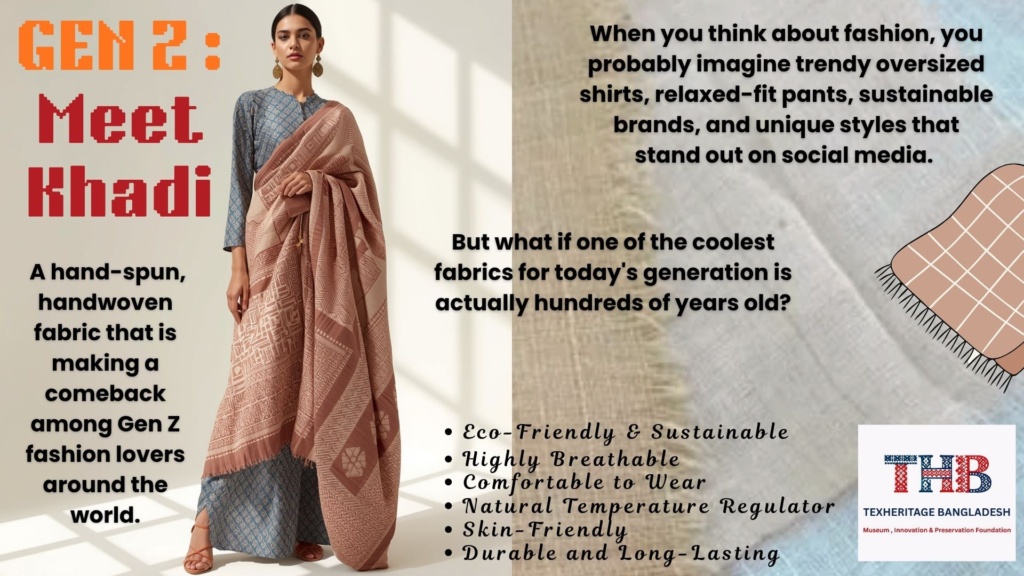
Khadi is a hand-spun and handwoven natural fabric traditionally made from cotton, though it can also be produced using silk or wool.
Unlike industrial textiles produced by high-speed machines, Khadi is created through a fully manual process:
- Cotton is cleaned and carded
- Fibers are spun into yarn using a spinning wheel (charkha)
- Yarn is handwoven on traditional looms
- The fabric is then finished without heavy industrial processing
This slow, human-centered production method gives Khadi its signature texture—slightly irregular, breathable, and uniquely alive.
Each piece is different. No two meters of Khadi are exactly the same.
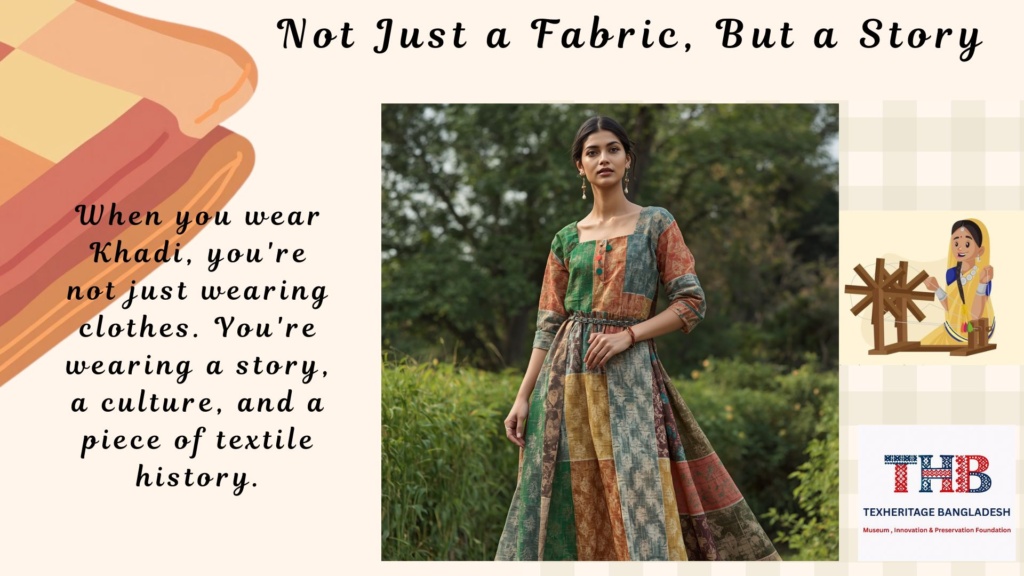
Historical Roots: A Fabric of Identity and Resistance
Khadi’s history is deeply tied to South Asia’s socio-political and cultural evolution.
For centuries, handloom weaving existed across the region as a household craft. But Khadi gained exceptional importance during the early 20th century when it became associated with the movement for self-reliance and indigenous production.
It was promoted as a rejection of mass industrial imports and a return to local craftsmanship, empowering rural artisans and reviving traditional spinning and weaving systems.
In this period, Khadi was no longer just fabric—it became a statement of economic independence, dignity of labor, and cultural identity.
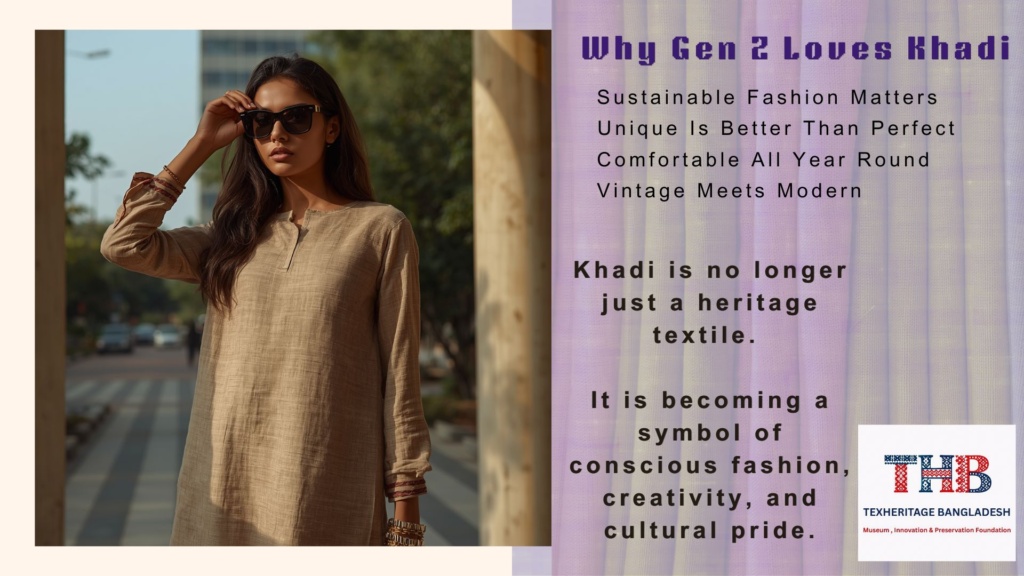
Why Khadi Matters in Today’s Fashion World
In the modern fashion industry, Khadi stands out for reasons that align closely with global sustainability goals:
1. Low Environmental Impact
Khadi production requires minimal electricity, low industrial processing, and significantly less carbon footprint compared to mass-produced textiles.
2. Artisan-Centered Craftsmanship
It directly supports rural spinners and weavers, preserving generational skills that are at risk of disappearing.
3. Slow Fashion Philosophy
Khadi naturally resists overproduction. It represents patience, durability, and conscious consumption.
4. Natural Comfort
The fabric is breathable, skin-friendly, and adaptable to tropical and warm climates—making it practical as well as ethical.
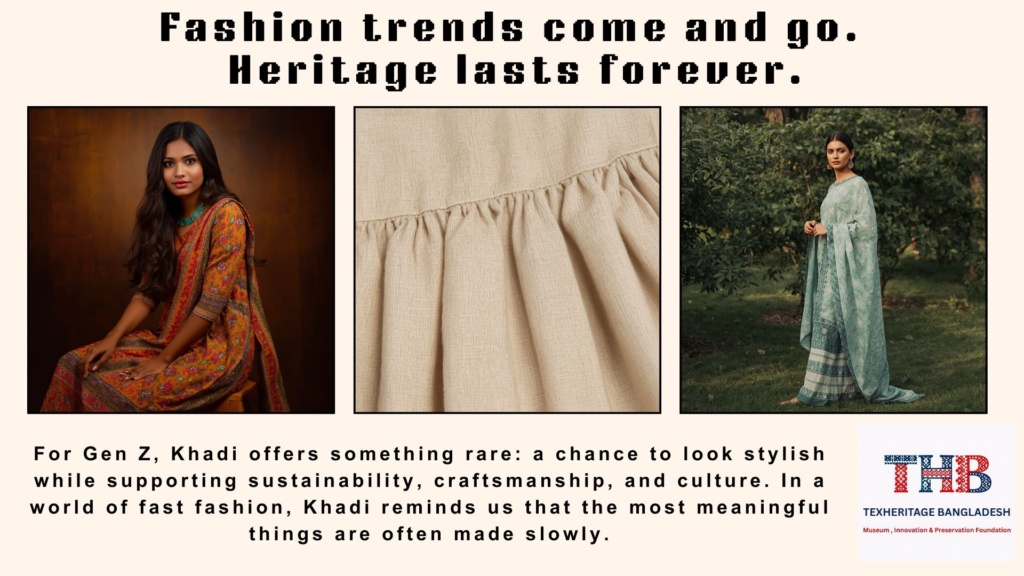
Khadi and Gen Z: A New Cultural Shift
Today’s younger generation is reshaping fashion values. For Gen Z, clothing is not only about appearance—it reflects ethics, sustainability, and identity.
Khadi fits perfectly into this shift.
Modern designers are reinterpreting Khadi in:
- Oversized shirts and relaxed tailoring
- Co-ord sets and contemporary fusion wear
- Minimalist streetwear silhouettes
- Experimental dyeing and texture innovation
What was once seen as traditional is now becoming contemporary fashion language.
This transformation is not just aesthetic—it is ideological. It reflects a growing demand for transparency, sustainability, and authenticity in what we wear.
Khadi and Gen Z: A New Cultural Shift
Today’s younger generation is reshaping fashion values. For Gen Z, clothing is not only about appearance—it reflects ethics, sustainability, and identity.
Khadi fits perfectly into this shift.
Modern designers are reinterpreting Khadi in:
- Oversized shirts and relaxed tailoring
- Co-ord sets and contemporary fusion wear
- Minimalist streetwear silhouettes
- Experimental dyeing and texture innovation
What was once seen as traditional is now becoming contemporary fashion language.
This transformation is not just aesthetic—it is ideological. It reflects a growing demand for transparency, sustainability, and authenticity in what we wear.
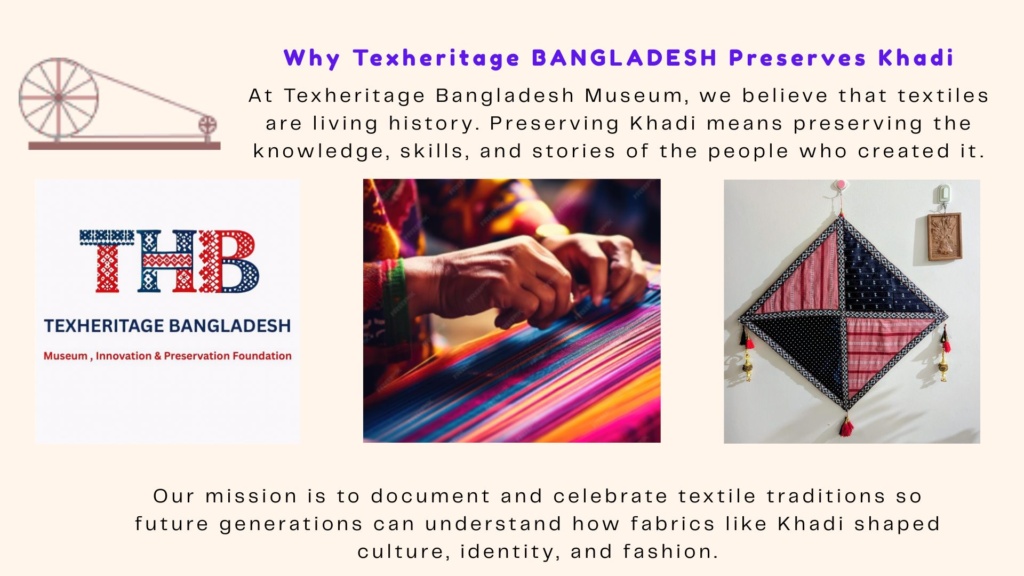
Khadi as a Living Textile Heritage
Khadi is more than a fabric—it is a living archive of human skill, patience, and cultural memory.
Every thread represents time, effort, and handwork. In a world driven by speed and automation, Khadi reminds us of a different rhythm—one where clothing is not just produced, but carefully created.
It connects:
- Past craftsmanship
- Present sustainability
- Future innovation
Conclusion
Khadi’s return is not a trend—it is a correction.
A return to slower processes.
A return to human touch.
A return to meaningful fashion.
Old fabric. New generation. Continuous legacy.
Khadi is not just being worn again—it is being reinterpreted, revalued, and reborn for a more conscious world.