By Texheritage Bangladesh: Museum, Innovation & Preservation Foundation Publication
1. Background
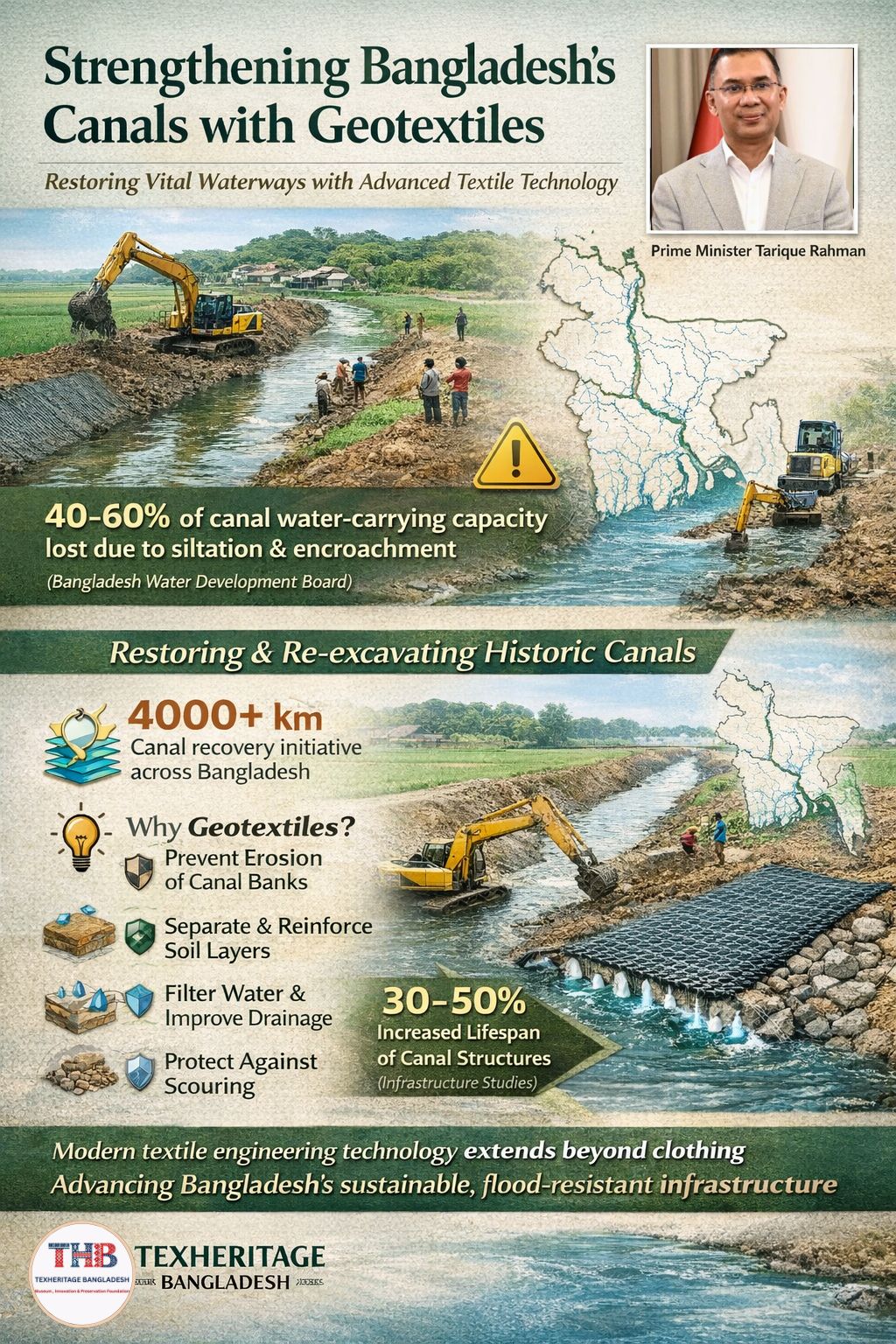
Under the leadership of Tarique Rahman, the Government of Bangladesh has launched the ambitious 2026 Canal Restoration Programme to re-excavate and restore historic waterways. The programme aims to ensure natural water flow, strengthen drainage systems, reduce urban waterlogging, and enhance climate resilience across urban and rural areas. According to the Bangladesh Water Development Board (BWDB, 2026), over 15,000 kilometers of canals have been identified for restoration, highlighting the national priority for sustainable water management.
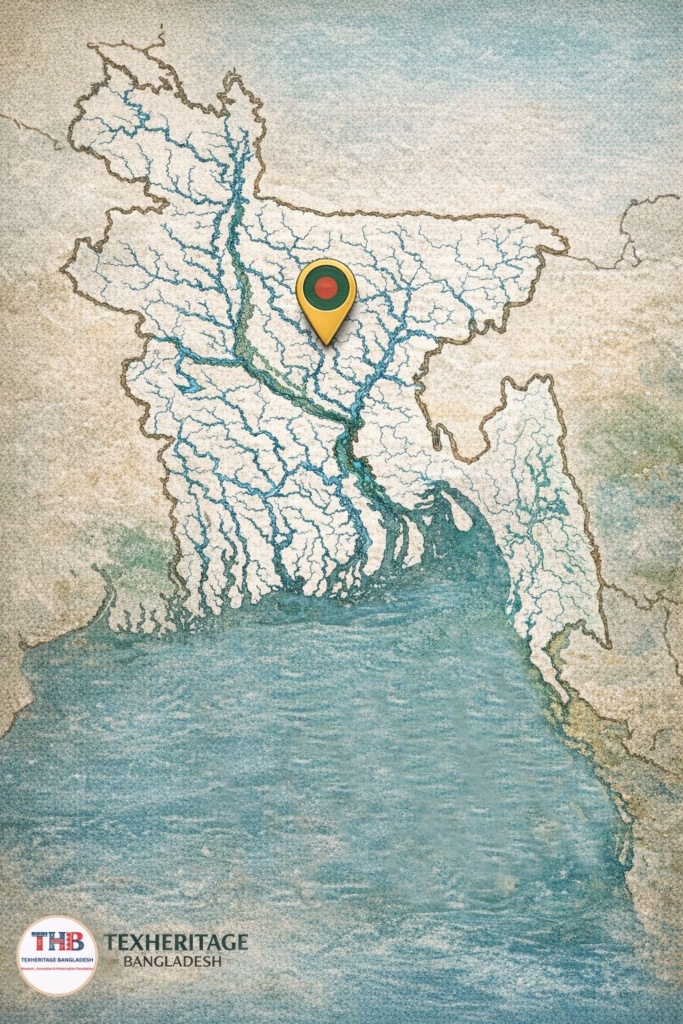
Bangladesh’s extensive riverine network has historically supported agriculture, fisheries, transport, and natural flood control. However, decades of urbanization, sedimentation, and encroachment have significantly reduced canal capacity. Institute of Water Modelling (IWM, 2026) reports that 40–60% of urban canals are blocked or silted, causing frequent waterlogging and diminished irrigation efficiency.
2. Objective
The objective of this proposal is to enhance the structural longevity and hydraulic efficiency of restored canals through the strategic integration of geotextiles, a proven technical textile used in civil engineering projects worldwide.
3. Technical Rationale
Geotextiles are permeable fabrics manufactured from high-performance polymers, such as polypropylene (PP), polyester (PET), and high-density polyethylene (HDPE). Advanced variants include woven, non-woven, and composite structures, often reinforced with UV stabilizers, anti-fungal coatings, and chemical-resistant finishes to withstand harsh environmental conditions.
Key engineered properties relevant to canal restoration:
- Tensile Strength: 10–50 kN/m to withstand hydrostatic and lateral pressures.
- Elongation & Modulus: Controlled 2–50% elongation ensures flexibility and embankment reinforcement.
- Permeability & Filtration: Retains fine soil particles (0.075–2 mm) while allowing water flow.
- Durability & Creep Resistance: Resistant to oxidation, UV, and hydrolysis; service life 50+ years.
4. Proposed Applications in Canal Restoration
- Bank Stabilization: Reduces bank shear stress during monsoon floods.
- Soil Separation & Reinforcement: Prevents soil intermixing, increases load-bearing capacity, and stabilizes soft alluvial soils.
- Filtration & Drainage: Optimizes hydraulic conductivity, allowing controlled drainage while retaining sediments.
- Protection Against Scouring: Shields canal beds under stone pitching, gabions, or concrete mats.
- Integration with Geocomposites: Combines geotextile-geonet systems to improve tensile strength, chemical resistance, and drainage efficiency, ideal for urban retrofitting.
5. Expected Outcomes
- Extended structural integrity and reduced maintenance costs.
- Improved water flow and reduced risk of urban flooding.
- Cost-effective, lightweight, and modular installation suitable for large-scale deployment.
- Enhanced climate resilience and sustainable water management.
6. Conclusion & Recommendation
Integrating geotextiles into the 2026 Canal Restoration Programme will ensure long-term canal functionality, structural stability, and environmental sustainability. Texheritage Bangladesh recommends adopting geotextile-based solutions for selected canal sections, particularly those with soft alluvial soils, high erosion risk, or urban encroachment, to optimize hydraulic efficiency and maintenance savings.
We propose a pilot implementation across 50–100 km of high-priority canals, followed by a nationwide scale-up based on performance evaluation. Technical guidance, material specifications, and monitoring protocols can be provided by Texheritage Bangladesh in collaboration with BWDB and IWM.