

By Texheritage Bangladesh: Museum, Innovation & Preservation
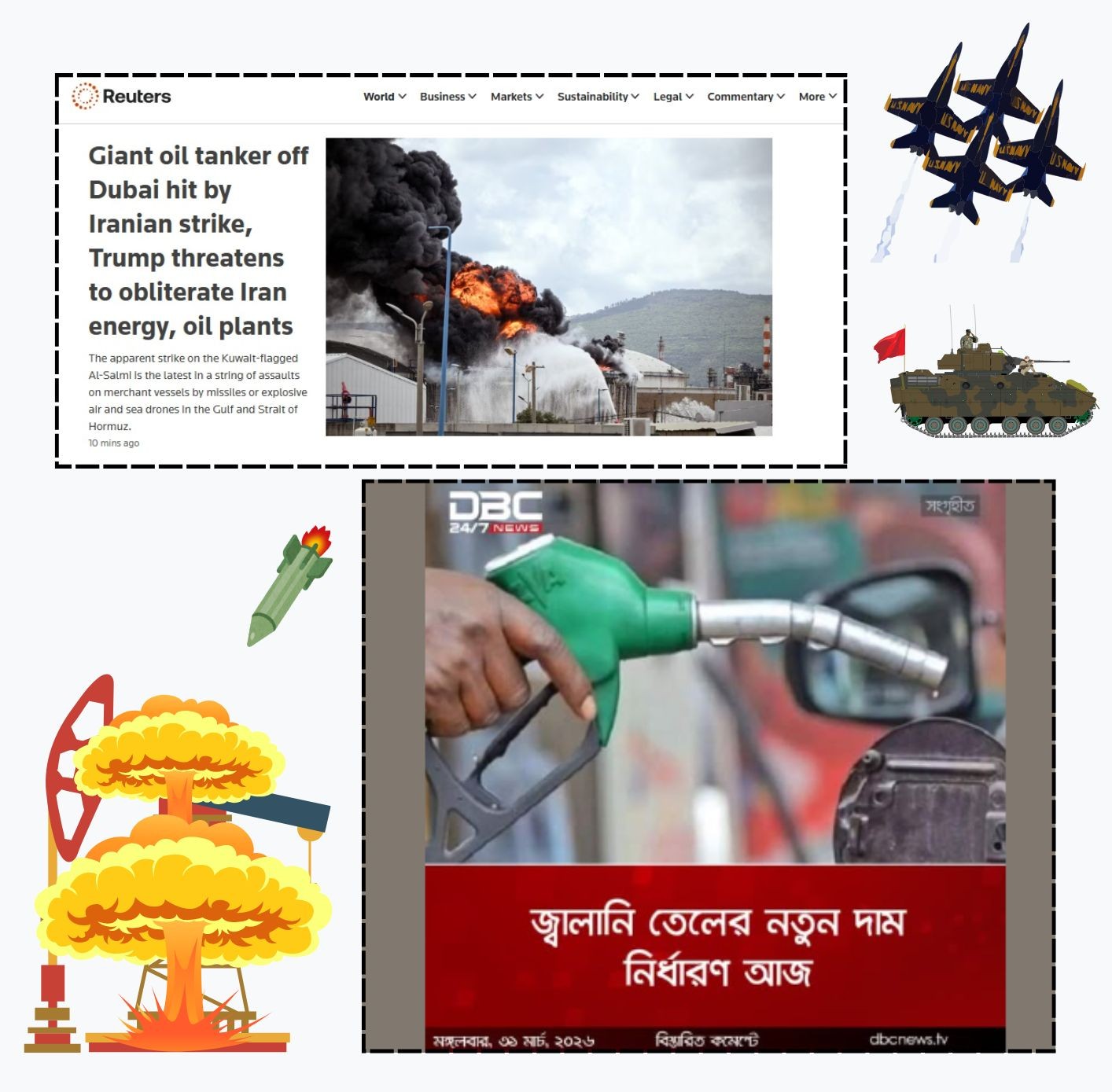
The textile and garment industry of Bangladesh is highly dependent on energy — gas, electricity, and diesel. During an oil or energy crisis, factories face increased production costs, shipment delays, and reduced competitiveness in the global market. Many factories think this problem can only be solved by the government or energy suppliers, but in reality, factories themselves can take several short-term actions to reduce the impact of the crisis and protect their business.
This article focuses on practical short-term actions that textile, dyeing, washing, and garment factories can implement immediately.
1. Start with an Immediate Energy Audit
Factories must identify where energy is being wasted. In many factories, energy is lost due to steam leakage, air leakage, idle running machines, and inefficient boilers. A simple internal audit can reduce energy consumption by 5–10% within one month without any major investment.
Key areas to check:
- Boiler efficiency
- Steam pipeline leakage
- Compressor air leakage
- Generator fuel consumption
- Idle machine running time
Energy saved = Cost saved.
2. Improve Production Planning
Poor production planning increases energy cost per piece. When factories run small lots, change styles frequently, and keep machines idle, energy consumption increases significantly.
Short-term solution:
- Run machines in full capacity
- Avoid small lot production
- Reduce style change frequency
- Ensure line balancing
- Increase operator efficiency
Even 5% efficiency improvement can reduce overall factory energy cost significantly.
3. Control Reprocess, Re-dye, and Re-wash
One of the biggest hidden energy losses in textile factories is reprocessing. If a fabric is dyed twice or garments are washed again due to shade or quality problems, energy cost doubles.
Factories should focus on:
- Lab dip approval before bulk
- Shade band control
- Right-first-time production
- Quality control in each process
Reducing reprocess means reducing extra steam, electricity, water, and chemical cost.
4. Improve Boiler and Steam Efficiency
Boilers are the heart of dyeing, washing, and finishing factories. Poor boiler management wastes a huge amount of fuel.
Immediate actions:
- Insulate steam pipelines
- Recover condensate water
- Maintain proper boiler pressure
- Clean boiler regularly
- Monitor gas consumption daily
This can reduce fuel consumption by 10–15% in a short time.
5. Reduce Diesel Consumption in Generators
During an energy crisis, many factories depend heavily on diesel generators, which is very expensive.
Short-term steps:
- Fix generator running schedule
- Avoid running generator for small loads
- Monitor diesel consumption per hour
- Set KPI for fuel consumption per machine
Monitoring itself can reduce unnecessary fuel usage.
6. Use Low-Energy Processes in Wet Processing
Wet processing consumes the highest energy in the textile industry. Factories can reduce energy by adjusting processes:
- Use low liquor ratio dyeing
- Use low temperature dyeing chemicals
- Use enzyme wash instead of hot wash
- Optimize drying process
- Avoid over-drying
Process optimization can save steam, electricity, water, and time.
7. Create Energy Awareness Inside the Factory
This is very important but often ignored. Operators, technicians, and production teams must understand that energy saving is now part of their job responsibility.
Factories should:
- Train operators about energy saving
- Give targets for energy saving
- Reward departments for reducing energy consumption
When workers understand the cost impact, they become more responsible.
Conclusion
The oil crisis is a serious challenge, but it is also a wake-up call for the Bangladesh textile industry. The factories that survive will not be the biggest factories, but the most efficient factories.
Short-term survival strategy is simple:
- Reduce waste
- Reduce reprocess
- Improve efficiency
- Improve planning
- Control energy usage
If a factory can reduce 10–15% energy consumption, it can survive even during a major energy crisis.
The future of Bangladesh textile industry will depend not only on cheap labor, but on smart factories, efficient factories, and energy-managed factories. This transformation must start now.
Texheritage believes textile history is not only about fabric and garments — it is also about technology, energy, efficiency, and industrial evolution. Today’s energy crisis will become tomorrow’s textile history lesson.