
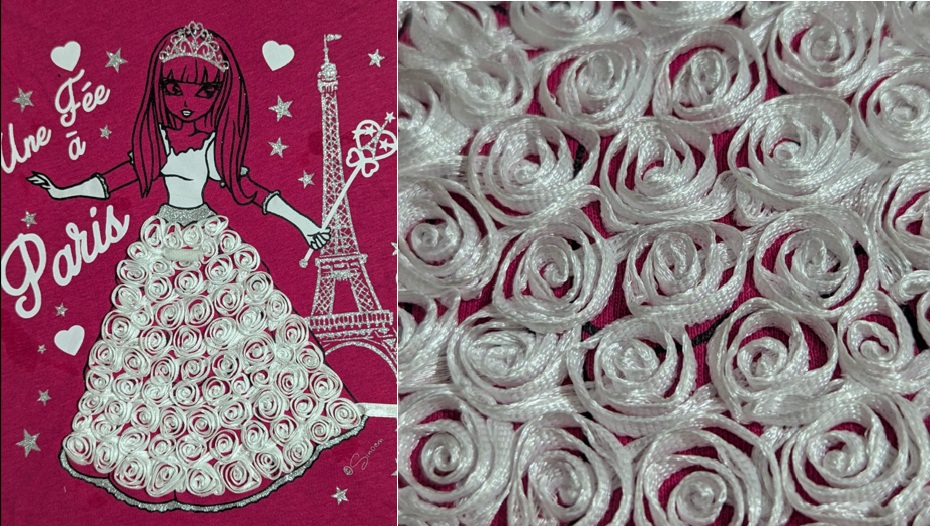
Ribbon embroidery is a decorative embroidery technique where silk, satin, or organza ribbons are used instead of traditional threads to create three-dimensional floral motifs, bows, and textured patterns. The ribbons are manipulated with needle and thread to form petals, leaves, and layered designs, producing a sculptural and tactile surface effect on fabrics.
Key technical aspects include:
- Ribbon Width: Typically 3–12 mm, depending on motif size
- Fabric Compatibility: Cotton, linen, silk, organza, and canvas
- Stitch Techniques: Ribbon stitch, French knot, loop stitch, and twisted stitch
- Dimensional Effect: Medium to high relief, soft and textured
Ribbon embroidery is commonly applied to garments, accessories, home textiles, bridal wear, and decorative panels. Stabilizers or backing fabrics are often used to maintain stitch structure, especially on delicate or lightweight fabrics.
From a textile education and museum perspective, ribbon embroidery demonstrates how material manipulation, stitch engineering, and artistic design combine to produce textured, sculptural surfaces. It bridges traditional needlework artistry with modern decorative applications in apparel and home textiles.